


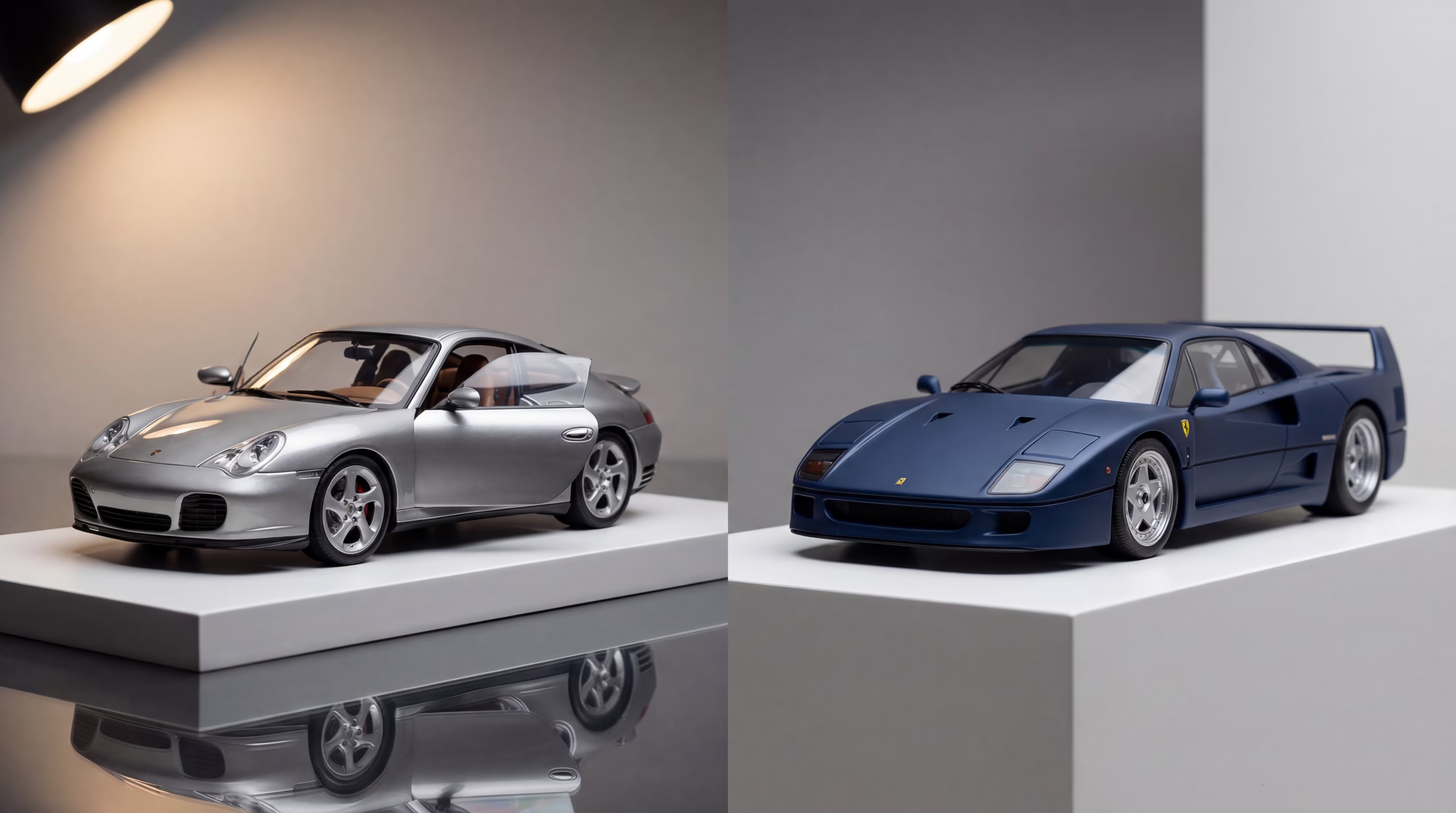
TL;DR: Diecast models use zinc-alloy metal construction, typically weigh 700–800g at 1:18 scale, and feature opening doors and hoods. Resin models are sealed, lighter, sharper in body lines, and produced in smaller runs. Composite hybrids (AUTOart) pair an ABS body with a diecast chassis to combine the strengths of both materials.
What Are Diecast and Resin Model Cars?
Scale model cars come in two main construction materials, and the difference goes far beyond cosmetics. Diecast models use a zinc-based metal alloy poured under pressure into steel molds. Resin models are cast from polyurethane or epoxy resin in silicone molds, then hand-assembled and painted. The material choice shapes everything: weight, detail capability, opening features, fragility, and price. In our years handling both materials, we’ve found that buyers who understand these differences make consistently better purchasing decisions.
Market data backs up what collectors already know: scale models are serious business. The global die-cast toys market was valued at USD 3.9 billion (~€3.6 billion) in 2024 and is projected to reach USD 6.09 billion (~€5.6 billion) by 2034 at a 4.3% CAGR (Global Market Insights). Collectibles as a broader category jumped 33% in dollar sales in a single measured period (Circana). The cars and trucks segment alone accounted for USD 1.99 billion of that global diecast market (Global Market Insights).
Diecast: Zinc-Alloy Metal Construction
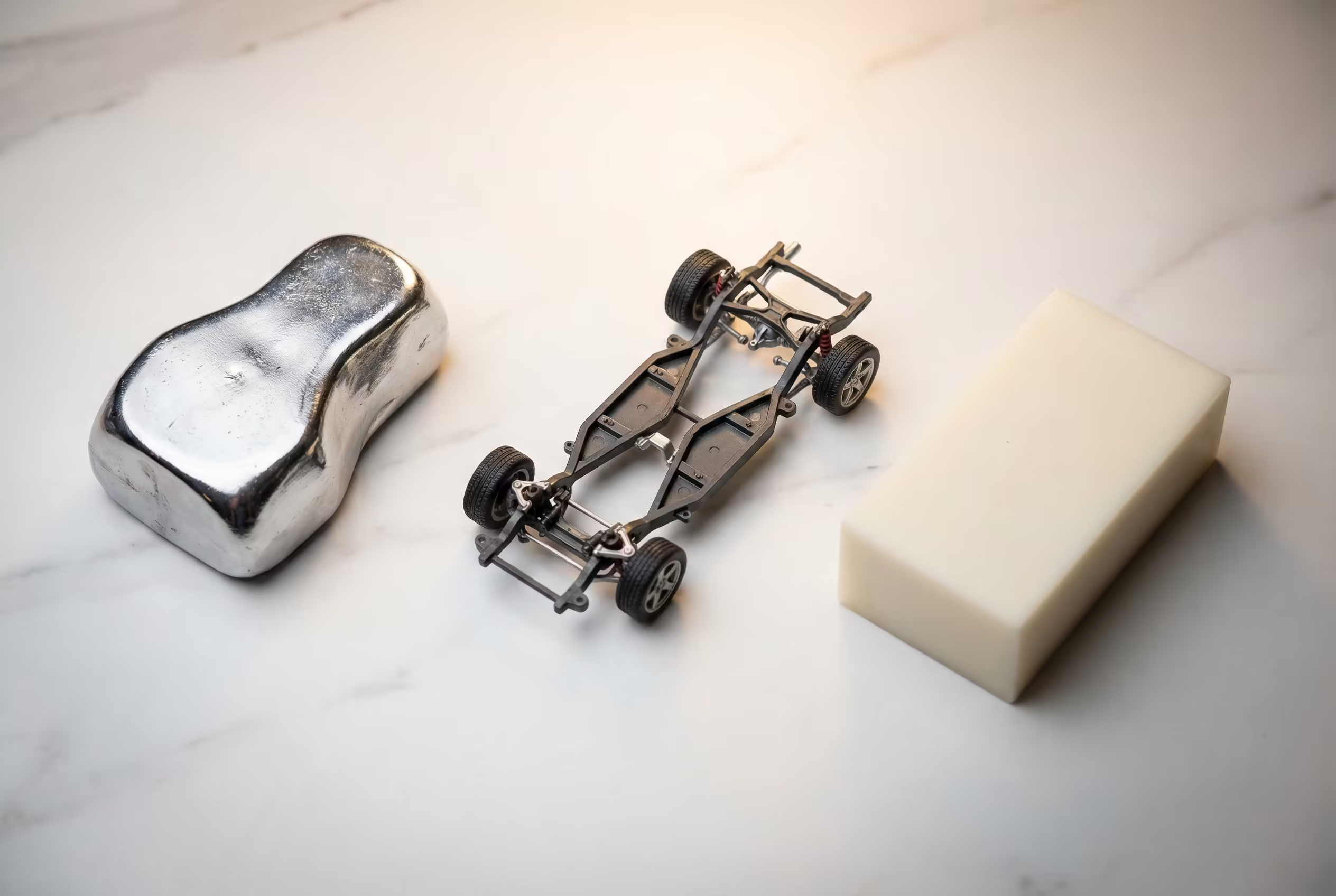
The term diecast refers to the process, not just the material. Molten zinc alloy (technically called zamak, a mixture of zinc and aluminum) is injected under high pressure into precision steel dies. The first modern diecast model cars appeared in 1919, produced by Tootsie Toys (HobbyZero). The process has been refined over more than a century, but the core principle hasn’t changed: high pressure, fast production, consistent results.
What defines a diecast model for collectors? Weight. Solidness. The ability to open the doors, lift the hood, and examine a detailed engine bay. These aren’t features you get for free. They’re built into the manufacturing process because metal can be engineered with precise hinges and tolerances that resin can’t replicate at typical collector scales.
Does that make diecast the obvious choice for everyone? Not at all. It’s right for collectors who value that interactivity, and the wrong choice for those who prioritize body line fidelity above everything else.
Brands like Norev (founded 1946, first diecast metal models circa 1965) (CitroenVie), Minichamps, Solido, and Maisto all use zamak construction. Price points range widely: a Solido 1:18 might sit in the €30–40 range, while a Minichamps limited edition or CMC can push well past €370.
Resin: Hand-Poured Polyurethane Construction
Resin models are built entirely differently. The material (typically a two-component system of liquid base plus hardener) is poured into silicone molds rather than injected under pressure (Motorsport Maranello). This matters enormously: silicone molds capture surface detail that steel dies simply can’t hold. Panel gaps, stitching patterns, mesh grilles, cooling vents: resin renders them with a fidelity that diecast struggles to match at the same scale.
But resin has one non-negotiable constraint: it can’t be engineered for moving parts at typical collector scales. The material lacks the torsional strength needed for functional door hinges or hood supports. So every standard resin model is sealed. Doors don’t open. That’s not a flaw; it’s an engineering consequence. Collectors who choose resin do so knowingly, often preferring the cleaner look of a body without visible shut lines from opening mechanisms.
Is sealed construction a dealbreaker? From our experience selling both, it’s entirely dependent on the individual. Some buyers tell us they’d never buy a model they can’t open. Others don’t care at all. Others switched specifically because they wanted sharper lines and didn’t miss the opening features at all. There’s no objectively correct position here.
GT Spirit, OttOmobile, and Almost Real are among the leading resin producers. Their runs are typically limited to 500 to 3,000 pieces, and prices reflect both the hand labor involved and the scarcity premium.
How Diecast and Resin Are Made: Manufacturing Differences
Understanding manufacturing is the fastest way to stop being surprised by the differences between materials. The process determines the product, and both approaches involve trade-offs that directly affect what ends up on your shelf. So how do these two manufacturing approaches actually compare?
Diecast Production: Die Injection and Assembly
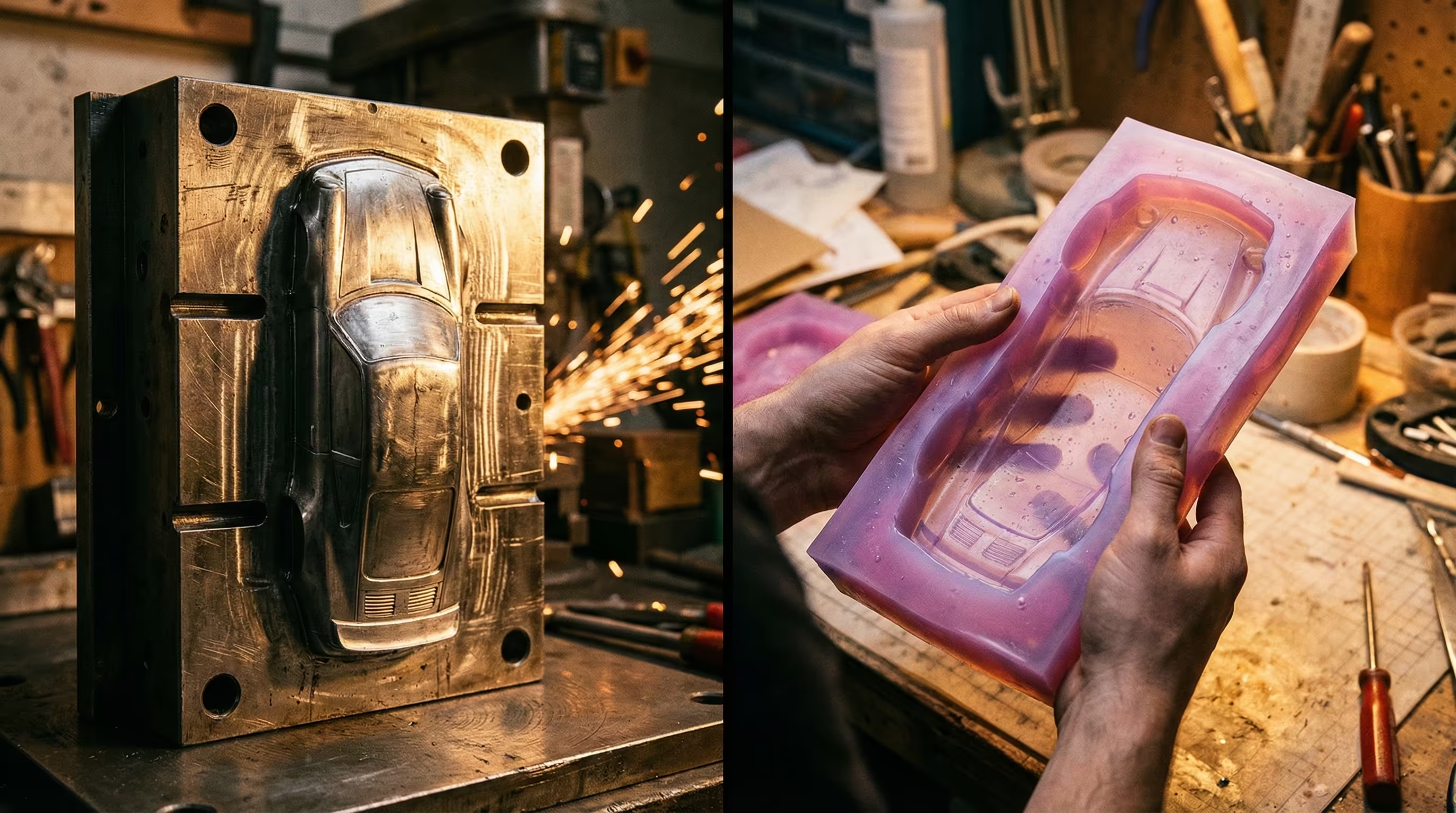
Diecast production starts with expensive steel tooling. That upfront investment is why diecast manufacturers produce larger runs; they need volume to amortize the tooling cost. Once the dies are ready, production is fast: molten zamak is injected under high pressure, parts cool in seconds, and a steady stream of body shells, doors, hoods, and undercarriage pieces comes off the line.
Assembly involves fitting those metal parts together, adding plastic or metal interior components, applying paint through multiple spray stages, and attaching glazing. The process is partly automated, partly hand-assembled depending on the price tier. A €35 Bburago goes through fewer quality control steps than a €185 Norev or a €370 Minichamps limited edition, and the difference shows in panel gap consistency and paint finish depth if you look closely.
Resin Production: Silicone Molds and Hand Assembly
Resin production uses silicone molds that are cheaper to produce than steel dies but degrade faster: a silicone mold might last a few hundred pours before detail fidelity drops. That’s part of why resin runs stay small. Each piece is poured individually, cured, removed from the mold, cleaned, and prepared for painting by hand. There’s no automated injection stage anywhere in the process.
The painting process on high-end resin is where the real labor investment shows. Multiple base layers, color coats, clearcoats, and hand-applied details contribute to the sharp, deep finish that resin collectors prize. The thinner acetate used for resin window glazing is optically clearer than the equivalent on most diecast models, though considerably more fragile (DiecastXchange Forum).
Why Manufacturing Method Affects Price
Price is where both approaches reveal their economics. The delta between diecast and resin isn’t simply about one being better. It’s about labor hours per unit and production volume. A 1:18 resin model from GT Spirit or OttOmobile typically retails between €90 and €165. A mass-market diecast from Solido might be €35–55. But a limited diecast from Minichamps or a hand-built CMC can easily exceed the price of most resin models. Scale and brand matter more than material when it comes to top-end pricing.
Resin pricing at the mid-tier exists because hand labor costs money. At the ultra-premium tier, diecast catches up because engineering complexity demands comparable labor investment. The claim that resin is always more expensive than diecast is only partly true: accurate for the mid-market, less so at the extremes.
Is price a reliable signal of material type, then? We’ve found it isn’t. Brand tier’s a far better predictor than material. A CMC diecast at €450 costs more than nearly every resin model on the market.
Detail and Finish: Comparing Quality
Here is where the debate gets genuinely interesting. Both materials can produce exceptional results. They’re just different routes to quality. But which one wins on pure surface quality at equivalent price points? The answer depends on the tier, and neither material has an unconditional advantage.
Paint and Surface Finish
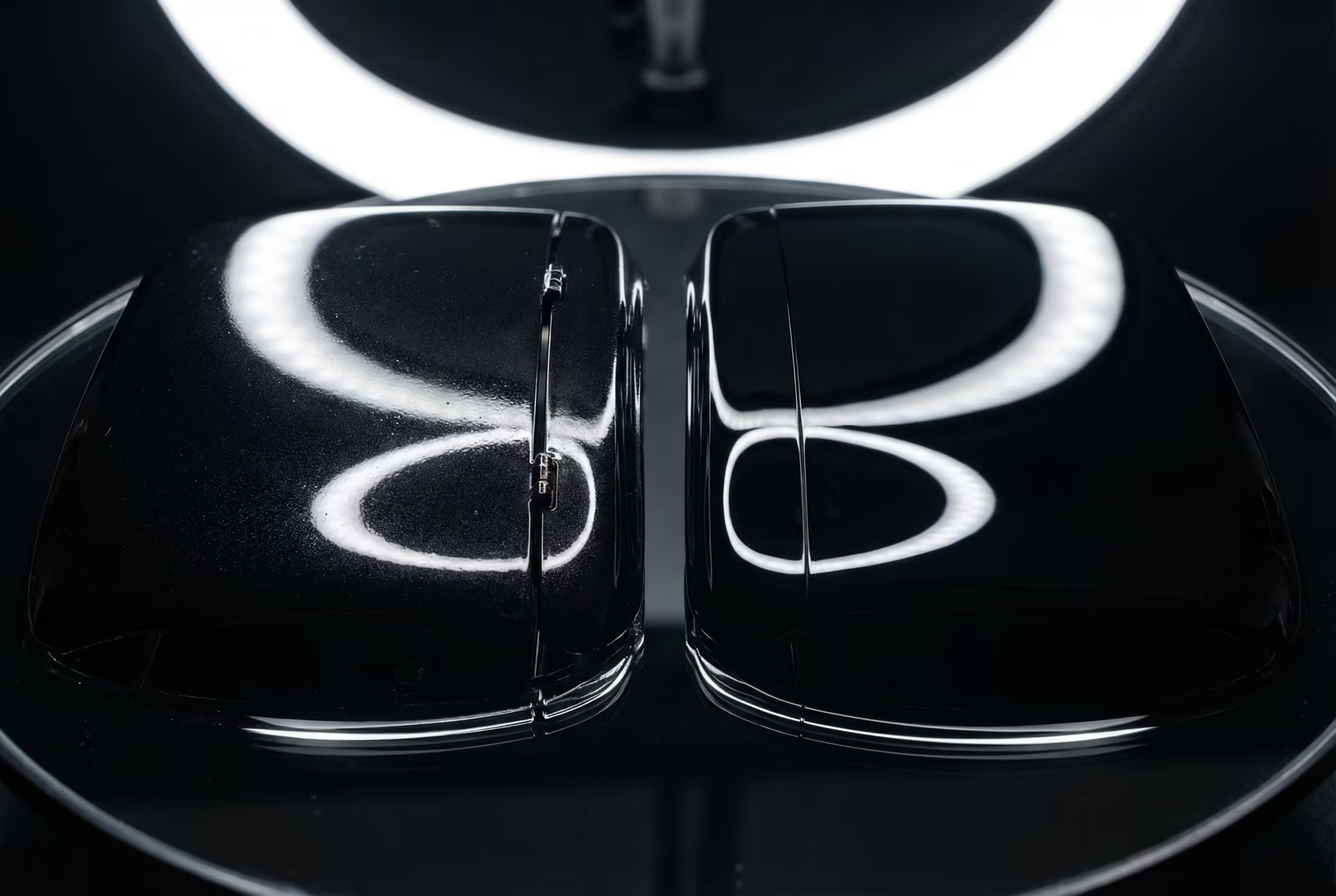
Resin surface is naturally smoother than zinc alloy fresh from the die. The material doesn’t trap gas bubbles the way metal does under high pressure, so the pre-paint surface needs less preparation. This translates to deeper, more consistent clearcoats and a paint finish that many collectors describe as superior to equivalent-priced diecast. From what we see across the models we stock, that assessment holds at the mid tier, though it’s not always the case at ultra-premium where diecast engineering closes the gap. Authentic Collectables notes that resin excels at capturing details from the curve of the body to the stitching on the seats, accurate in the hands of brands that invest in hand-painting.
Diecast at the high end absolutely competes. A Minichamps 1:43 or a BBR 1:18 can match or exceed dedicated resin in paint quality. But entry-to-mid diecast often shows stippling (tiny paint dots caused by the metal surface absorbing paint unevenly) (Motorsport Maranello). It’s less common at higher price tiers, but it’s a known issue worth understanding before you buy.
Panel Gaps and Shut Lines
This is where resin holds a structural edge. Sealed construction means no functional hinges, no opening mechanisms, no engineering compromises to fit moving parts. The body is one continuous form, and the panel gaps visible on a resin model are purely aesthetic, scribed into the mold to suggest doors and panels without actually being functional.
On a diecast model, door gaps have to accommodate real hinges and latches. The gap needs to be wide enough for the door to swing open without binding, which means they’re often visibly wider than on the real car. Getting this right is one of the hardest engineering challenges for diecast manufacturers, especially at 1:18 scale where proportions are under close scrutiny.
Interior and Undercarriage Detail
Inside and underneath is where opinions split. Diecast models with opening hoods give you access to an engine bay, detailed or simplified depending on the tier, but present and examinable. An open trunk reveals luggage space or a spare wheel. Collectors who enjoy the interactive side of model ownership genuinely value this access.
Resin interiors can be extraordinarily detailed even without physical access, because the interior is visible through clear windows and the brand knows you can’t open the car anyway. Some resin interiors rival opening-hood diecast equivalents in visual accuracy, because all the labor went into visible finish rather than functional mechanisms. It’s a different philosophy of what detail means, not a lesser one.
Weight and Durability
Pick up a 1:18 diecast model and the weight is immediately convincing. It feels substantial in a way that suggests engineering, not toy production. Collectors on DiecastXchange have measured specific models: typical 1:18 diecast runs 700–800g (DiecastXchange Forum). That’s close to the weight of a filled water bottle. The heft adds to the sense that you’re holding something genuinely crafted from metal.
Does weight actually matter to a display piece that lives in a case most of the time? That’s a fair question. We’ve seen collectors for whom heft’s completely non-negotiable, and others who genuinely don’t notice once it’s on the shelf. It depends on how you interact with your collection.
The Heft Factor: Metal vs Polymer
Resin is lighter for its size, but light is relative. A large 1:18 resin model is denser than you might expect. Some collectors note that resin shipping costs run higher than expected (DiecastXchange Forum). The in-hand feel is simply different. Without the density of zinc alloy, resin models don’t have that same satisfying thunk when you set them down.
AUTOart composite models are worth noting here: AUTOart actually adds ballast weights internally to give composite pieces a more convincing in-hand feel (DiecastXchange Forum). Collector-measured weights show an AUTOart composite AE86 at 524g versus a traditional diecast Wangan 911 at 598g, and the AUTOart Signature Veyron at 870g (DiecastXchange Forum). The composite is lighter, but the gap isn’t dramatic, and surface quality often compensates.
Drop Resistance and Repair Options
Drop a diecast model. It might chip paint, bend a mirror, or dent a soft metal panel. It probably won’t shatter. Drop a resin model on hard flooring and the outcome is much less predictable: the material can crack or shatter on impact, and the thin acetate window glazing is considerably more fragile than equivalent diecast glazing (DiecastXchange Forum). That’s a practical consideration that shapes how you handle and display your models.
Repair options differ significantly. Diecast damage’s often addressable by a skilled hobbyist: body filler, primer, touch-up paint, and patience can restore mild damage. Resin damage is harder to fix invisibly. Epoxy fills and careful painting can address cracks, but a shattered corner is very difficult to restore without visible evidence. If it’s broken, it’s likely to show. We’d recommend treating resin models as permanent display pieces, not models to be regularly handled.
Opening Features vs Sealed Construction
This is the most emotionally charged of all the differences. It deserves a direct answer rather than a diplomatic dodge. Does having opening parts actually make a model better for display?
Why Diecast Opens and Resin Stays Sealed
Diecast opens because metal can be machined with the tight tolerances needed for functional hinges. A door hinge on a 1:18 diecast is a tiny but real mechanism: a pin through aligned barrels, able to swing the door through its arc without binding. Resin can’t be manufactured with this precision at the material level. It’s cast, not machined, and the material properties don’t support the repeated flexion that a functional hinge requires (Motorsport Maranello).
Composite models solve this by using a diecast interior structure as the mechanical backbone: the rigid metal interior supports the opening panels just as a carbon fiber tub supports the body of a supercar (DiecastSociety.com). That’s genuinely clever engineering, not a shortcut.
Do Opening Parts Affect Display Quality?
Here is an honest answer rather than the comfortable one: opening parts don’t always improve display quality, and sometimes they diminish it. When all doors and hood are closed, a diecast can look nearly as clean as a resin equivalent. The visible shut lines are the tell. But when a collector displays a diecast with the hood open and an engine visible, it achieves something a sealed resin model simply can’t.
Resin collectors often argue that sealed construction looks better when closed: sharper lines, no visible hinge recesses, no risk of a door slowly drooping over years due to hinge wear. Both positions are defensible. That’s why serious collectors typically maintain shelves with both types rather than committing to one material exclusively.

Composite Models: The Third Option
AUTOart’s shift to composite construction was one of the most discussed moves in the collector hobby, and understanding why they made it explains the category better than any general description. Their solution pairs a diecast metal interior chassis with an injection-molded ABS (Acrylonitrile Butadiene Styrene) thermoplastic body. That’s a patent-pending design (DiecastSociety.com).
Why would a brand known for quality diecast move away from the material? Because collectors were specifically raising panel line sharpness and body proportion issues, and composite engineering addressed those complaints head-on.
Metal Body with Resin Details
Composite construction solves problems that pure diecast can’t easily address. That’s the core of AUTOart’s argument. ABS body panels can be made considerably thinner than zinc alloy equivalents, giving more realistic proportions, especially at the A-pillar, door skins, and hood line where metal thickness becomes visible at scale. The surfaces are smoother before painting, with sharper bodylines, because ABS injection doesn’t trap gases the way zinc does (DiecastSociety.com).
The diecast interior chassis provides structural rigidity and acts as the mechanical backbone for opening doors and hood, maintaining the functional features diecast collectors expect, while gaining the surface quality benefits of a non-metallic exterior. Think of the diecast interior as the frame of a building: invisible in use, but the structure depends on it.
Brands Using Composite Construction
AUTOart is the brand most associated with composite construction, having transitioned their flagship 1:18 lineup away from traditional diecast. Models like the Jaguar F-Type R Coupe and Lamborghini Huayra are composite production examples (DiecastSociety.com). Composite models are priced accessibly, typically around €85–110, generally lower than their equivalent-detail diecast offerings.
Not every brand’s consistent about using the term composite, though. Some manufacturers use ABS components selectively for complex interior trim pieces or delicate exterior details that zinc alloy can’t render at scale. The result is a spectrum rather than a clean three-way split: the lines between pure diecast, composite, and pure resin are blurrier than the marketing suggests.
Which Brands Lead in Each Material?
Collector opinion on brand rankings is genuinely subjective, but broad tiers are well-established within the hobby. We have structured this by material and scale focus, drawing on how the collector community categorizes these manufacturers and from our experience sourcing and stocking these brands. For a deeper look across price points and subject coverage, we’ve put together our complete brand tier ranking.
Top Diecast Brands by Tier
| Tier | Brand | Scale Focus | Price Range (EUR) | Notes |
|---|---|---|---|---|
| Entry | Bburago, Maisto | 1:18, 1:24 | €15–45 | Good for beginners; simplified interior detail |
| Mid | Solido, Norev | 1:18, 1:43 | €35–90 | Strong detail-to-price ratio; opening features standard |
| High | Minichamps, Schuco | 1:43, 1:18 | €75–230 | Precision finish; strong motorsport licensing heritage |
| Ultra | CMC, BBR | 1:18, 1:12 | €275–600+ | Museum-grade construction; very limited production |
Top Resin Brands by Tier
| Tier | Brand | Scale Focus | Price Range (EUR) | Notes |
|---|---|---|---|---|
| Mid | GT Spirit, OttOmobile | 1:18 | €90–165 | Limited runs; sealed; strong road car coverage |
| High | Almost Real | 1:18, 1:43 | €110–200 | Highly detailed interiors; strong German-brand coverage |
| Ultra | BBR, MR Collection | 1:18, 1:43 | €185–460+ | Italian resin craft; Ferrari and supercar focus |
Composite sits between the diecast tiers: AUTOart composite models typically run €85–120, placing them between mid and high diecast in price while competing above their price in surface quality. AUTOart is classified as composite, not diecast. This distinction matters when comparing specs between brands.
Choosing the Right Material for Your Collection
If you’re starting out, our beginner guide to starting a collection covers the bigger picture of building a collection from scratch. Here we focus specifically on the material decision itself.
Budget-Driven Collectors
At the entry level, diecast wins on pure value. A €35 Solido gives you a metal model, opening features, and reasonable detail for the price. There’s no resin equivalent at that price point. The labor costs of resin production make sub-€75 resin from credible brands essentially nonexistent. If you have €45 to spend on one model, buy diecast.
As your budget grows, the calculation shifts. At €90–150, you can choose between a solid high-tier diecast (Minichamps 1:43, Norev 1:18) or your first mid-tier resin (GT Spirit, OttOmobile). Both are excellent choices. The decision comes down to whether you value opening features or sharper body lines and limited-run collector appeal.
Detail-Driven Collectors
If maximizing visible surface detail is the priority, resin at the mid-to-high tier is hard to beat at 1:18 scale. The sealed construction and smooth pre-paint surface allow for paint depth and body line accuracy that diecast struggles to match at equivalent price points. Almost Real and BBR are the names collectors cite most often when discussing paint finish quality in particular.
For collectors who want both opening features and strong surface quality, composite (AUTOart) hits a point where engineering meets aesthetics. In our opinion, composite is the most underrated option at its price point. It’s not quite resin in body line sharpness, not quite traditional diecast in weight, but it offers a distinct experience that many collectors find more satisfying than either pure form.
Mixed Collections: Combining Both Materials

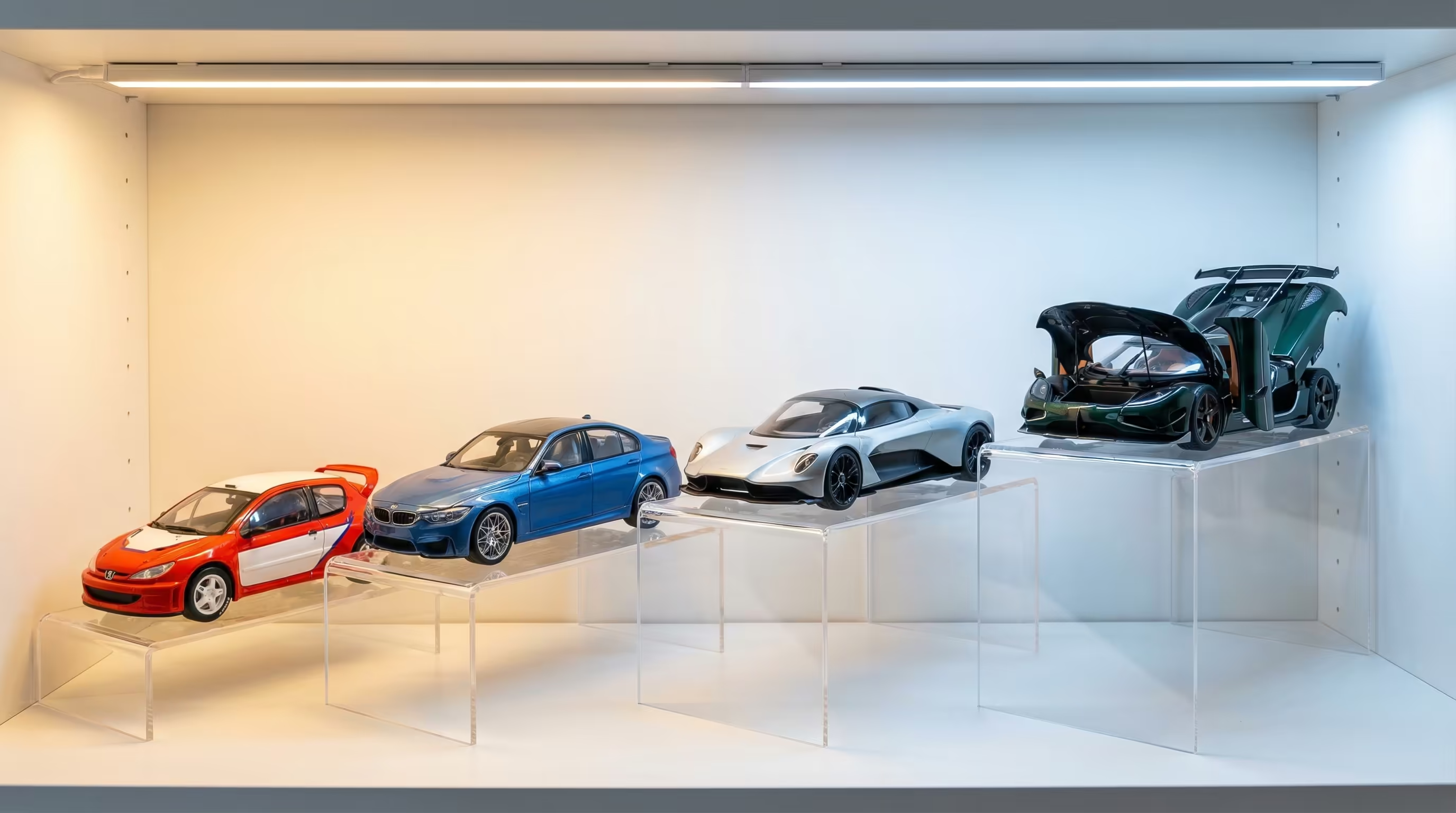
The most experienced collectors we encounter don’t stick exclusively to one material. A shelf might hold a diecast Norev Porsche 911 with its hood open showing a detailed flat-six, sitting next to a sealed GT Spirit 911 Turbo where the proportions and paint are simply more accurate. They complement rather than compete. That’s the most honest summary of mixed-material collecting.
Practically, mixing materials means adjusting your display environment. Resin needs stable temperature and humidity to prevent long-term degradation. Diecast needs humidity protection for different reasons. Mixed collections are manageable, requiring care planning across both failure modes.
Advanced: Understanding Material Degradation
Every material has a long-term failure mode. Knowing them in advance means you’re protecting your collection before problems develop. Our care and display guide covers the practical steps; here we explain the underlying mechanisms.
How long should a well-maintained model actually last? In our experience, effectively indefinitely. We’ve handled diecast pieces from the 1970s in mint condition, and we’ve also inspected resin models over fifteen years old that’re showing zero visible degradation. The determining factor is always storage conditions, not the material itself. It’s not complicated.
Zinc Pest in Diecast Models
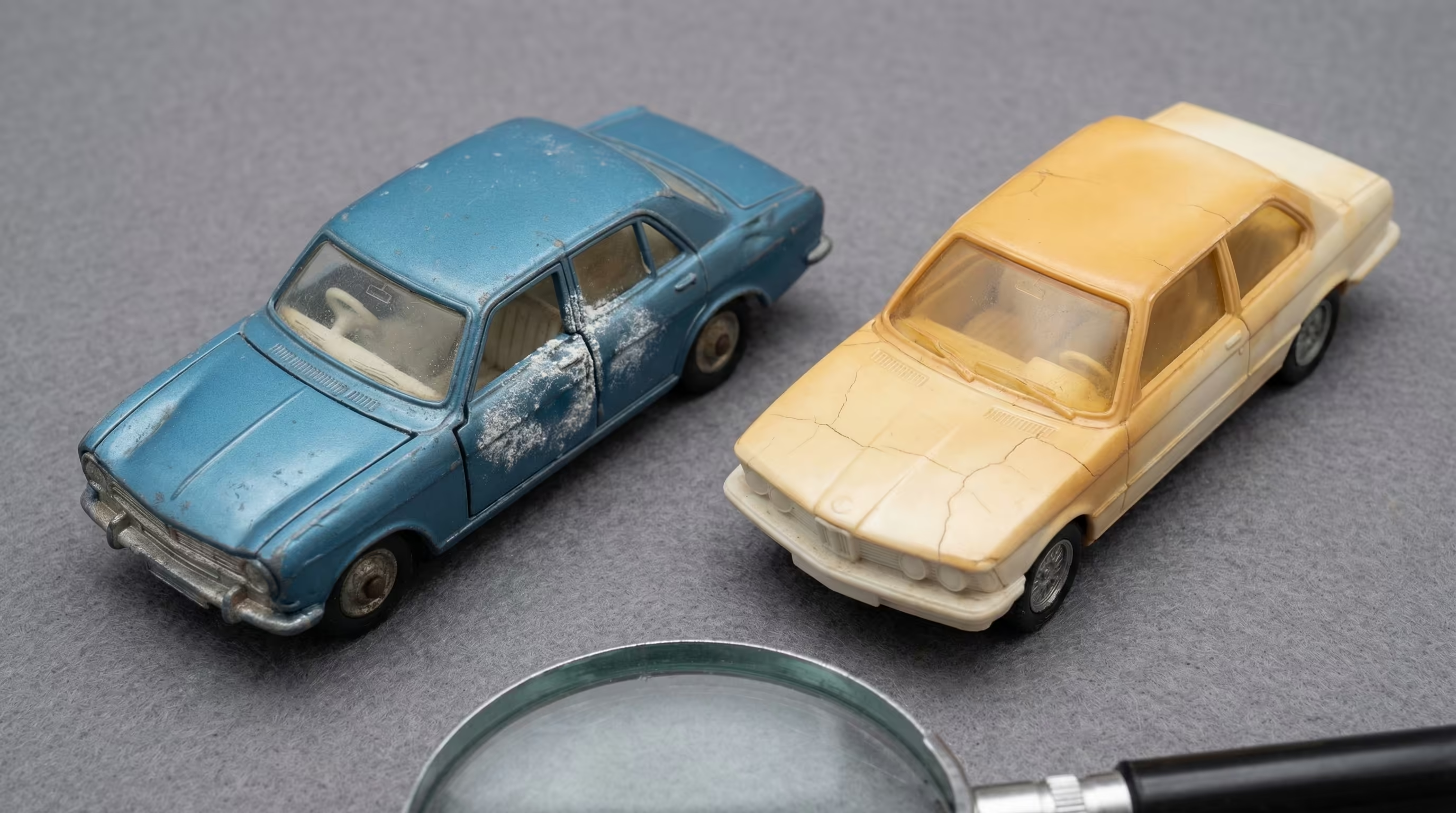
Zinc pest is intercrystalline corrosion: impurities (lead, cadmium, or tin) in the zinc alloy react over time, causing the metal to expand from within and eventually crumble (DiecastXchange Forum). The first symptom is usually door sag: hinges are the smallest and most mechanically stressed components, so they fail first. White powdery residue (zinc oxide) follows as the process progresses.
Should you worry about zinc pest if you’re buying models today? Not really. It’s largely a concern for collectors of vintage pre-1960 pieces, not current production. Modern alloys don’t carry the same risk.
The condition was first identified in 1923 and it was widespread in toys made before 1960 (DiecastXchange Forum). Development of high-purity zamak alloys largely solved the problem, and models produced after 1960 are generally considered low-risk. Modern diecast from reputable manufacturers uses 99.99% pure zinc alloys, which dramatically reduces the impurity-driven failure mechanism.
Humidity above 65% accelerates whatever residual risk exists (DiecastXchange Forum). Keep your diecast in a stable, low-humidity environment (a display case with silica gel packets works well), and you’re unlikely to see zinc pest on any post-1960 model from a reputable brand.
Yellowing and Brittleness in Resin
Resin’s enemies are UV radiation and temperature swings. Polyurethane resin yellows under prolonged UV exposure, particularly visible on clear (window) parts and on pale-colored bodies. It’s a chemical process in the polymer structure that can’t be fully reversed once it starts. Temperature cycling between cold nights and warm days causes the resin to expand and contract, which over years can lead to hairline cracking, particularly around areas of thin section.
Prevention is straightforward: keep resin models away from direct sunlight, maintain a stable temperature, and avoid placing them near heat sources like radiators or on sun-facing shelves. UV-filtered display cases help significantly. These aren’t complicated precautions and don’t require specialized equipment beyond a good display solution.
Can you reverse yellowing once it starts? Unfortunately, no. It’s a permanent polymer change, which is exactly why prevention matters so much more than any repair attempt.
Storage Conditions That Matter
For both materials, the recommendations converge on similar principles: stable temperature, moderate humidity (40–60% is ideal), and protection from direct light. The specifics differ:
- Diecast: primary risk is zinc pest from humidity; silica gel in enclosed cases helps. Secondary risk is paint oxidation on high-gloss finishes.
- Resin: primary risk is UV yellowing and thermal cracking; UV-filtered glass or acrylic in display cases is the single most effective precaution.
- Composite: risks combine both zones, as the metal chassis shares diecast humidity vulnerabilities and the ABS body shares resin UV sensitivities. Same precautions, double vigilance.
- All materials: dust degrades paint over years. Enclosed cases beat open shelves for long-term preservation of any model.
Collectors who take the long view treat these conditions as non-negotiable from the start. It’s much easier to maintain proper conditions than to reverse damage that’s already set in.
FAQ
Are resin models more fragile than diecast?
Generally yes. Resin can crack or shatter on impact, while diecast typically dents or chips without breaking apart. The thinner window glazing on resin models is also considerably more fragile than diecast equivalent (DiecastXchange Forum). Treat resin models as permanent display pieces rather than models to be regularly picked up and handled from a shelf.
Why are resin models more expensive?
Resin production requires significantly more hand labor per unit than diecast. Smaller production runs mean tooling costs spread over fewer pieces, and the painting process involves more manual stages. Limited editions from brands like GT Spirit or Almost Real carry both the labor premium and a collector scarcity markup that diecast mass production can’t command at equivalent price points.
Can you tell diecast from resin by looking at a photo?
Sometimes. Resin models typically show tighter shut lines, slightly deeper clearcoat on higher-end pieces, and no visible hinge gaps. Diecast often shows slightly wider panel gaps where opening features are present. In 1:43 scale, the difference is harder to spot. The best approach’s to check the manufacturer-listed material or look for sealed body versus opening parts in product descriptions. For brand-based guidance, see our article on which brands lead in each material category.
Do diecast models hold value better than resin?
Neither material’s a reliably better investment in general. Brand, edition size, and subject matter matter far more than material type. Ultra-limited resin from BBR or MR Collection often appreciates significantly on the secondary market due to small production runs. Rare diecast from CMC or Exoto does the same. Our investment and resale value analysis examines what actually drives secondary market prices across both materials.
Is one material better for a specific scale?
Diecast dominates smaller scales: 1:64 and 1:43 are overwhelmingly diecast territory because the mechanical complexity of opening features at small scales suits metal better. At 1:18, both materials thrive. At 1:12 (very large, around 35cm), resin and composite appear alongside ultra-premium diecast. Resin’s detail advantage matters more at larger scales where surface nuances are visible at normal viewing distance (Model Cars Houston).
Can damaged resin models be repaired?
Minor damage (small chips, hairline cracks) can be addressed with careful epoxy filling and touch-up painting, though invisible repairs require real skill. Major breaks (shattered sections, snapped-off components) are very difficult to restore without visible evidence. Diecast is generally more forgiving of light handling damage. For resin, prevention is a considerably better strategy than any repair attempt.
Are composite models worth the premium?
AUTOart composite models sit at a similar price to mid-to-high diecast, so they’re not dramatically more expensive. For collectors who want opening features and the surface quality advantages of non-metal body panels, composite’s a genuine alternative to both pure forms. The main trade-off is lower weight versus traditional diecast, though AUTOart adds internal ballast to address this (DiecastXchange Forum). If AUTOart subject lineup matches your interests, composite is well worth considering.
Conclusion: Picking Your Path
Diecast and resin aren’t competing for the same collectors. They serve different preferences that can coexist on the same shelf. Diecast gives you metal construction, satisfying weight (700–800g at 1:18 scale), and the tactile experience of opening doors and hoods (DiecastXchange Forum). Resin gives you sealed perfection: razor-sharp body lines, exceptional paint depth, and limited-edition scarcity. Composite (primarily AUTOart) sits between them, solving the weight-versus-surface-quality trade-off with hybrid engineering.
The decision framework’s simpler than the debate makes it sound. Start with your budget: below €75 buy diecast. Then consider what you actually do with your models. If they live permanently under a case lid and you assess them from the front, resin sealed quality shines. If you pick them up regularly and enjoy the interactive experience, diecast or composite fits better.
Whichever material you choose, proper care’s what preserves a collection over years. Our guide to protecting your models from damage covers the practical steps for both diecast and resin, from display case selection to humidity control and UV prevention. For the broader collector community perspective, DiecastXchange is an active forum where collectors compare real-world quality notes, while Global Market Insights tracks market data for those interested in the hobby broader growth context.