TL;DR: Limited editions under 5,000 pieces, premium brands like CMC and AUTOart, mint-in-box condition, and resin construction in the premium segment all correlate with stronger value retention. But don’t expect stock-market returns; most collectors who profit simply bought what they loved and waited.
Key Findings
Four patterns stood out in our analysis: production run size matters (but only below a certain threshold), material choice influences value retention differently across price segments, brand reputation serves as the most reliable predictor of long-term performance, and condition remains the single largest variable in final auction prices. We’ve seen these patterns play out over years of handling thousands of models, and it’s reassuring to see the auction data confirm what we suspected from shop-floor experience.
The global diecast scale model market was valued at approximately EUR 1.29 billion, projected to reach EUR 2.17 billion by 2032 at a CAGR of 7.70% (GlobeNewsWire). Collectors account for 62% of market share, driving over 65% of total demand for specialized diecast models (Business Research Insights). That’s not a niche hobby; it’s a market with real money flowing through it. So does that money flow back to individual collectors on resale? It depends on what you bought, how you stored it, and how long you’re willing to wait. Patience pays. Impatience doesn’t.
Methodology: How We Analyzed the Data
We pulled results from multiple auction platforms, including Barnebys (which documented 1,507 sold lots for 1:18 diecast model cars alone) and several eBay completed-listings datasets (Barnebys). The sample covers 1:18 and 1:43 scales primarily, with some 1:12 and 1:24 data where available. Our focus was on hammer prices versus original retail, measured as a percentage of retail price retained.
A few caveats. In our experience, auction data skews toward models that actually sold; unsold lots (which don’t appear in most databases) would pull the averages down. We’ve also relied on publicly available retail prices from manufacturer websites and authorized retailers. Where retail prices weren’t available, we estimated based on price lists from the same production year. Your mileage may vary if your purchase price differed from standard retail.
Are there gaps? Absolutely. Resin models from smaller manufacturers often lack reliable original pricing, and private sales (forums, collector groups) aren’t captured at all. We’re transparent about this because, in our opinion, acknowledging limitations makes the findings more trustworthy, not less.
Do Limited Edition Models Hold Value Better?
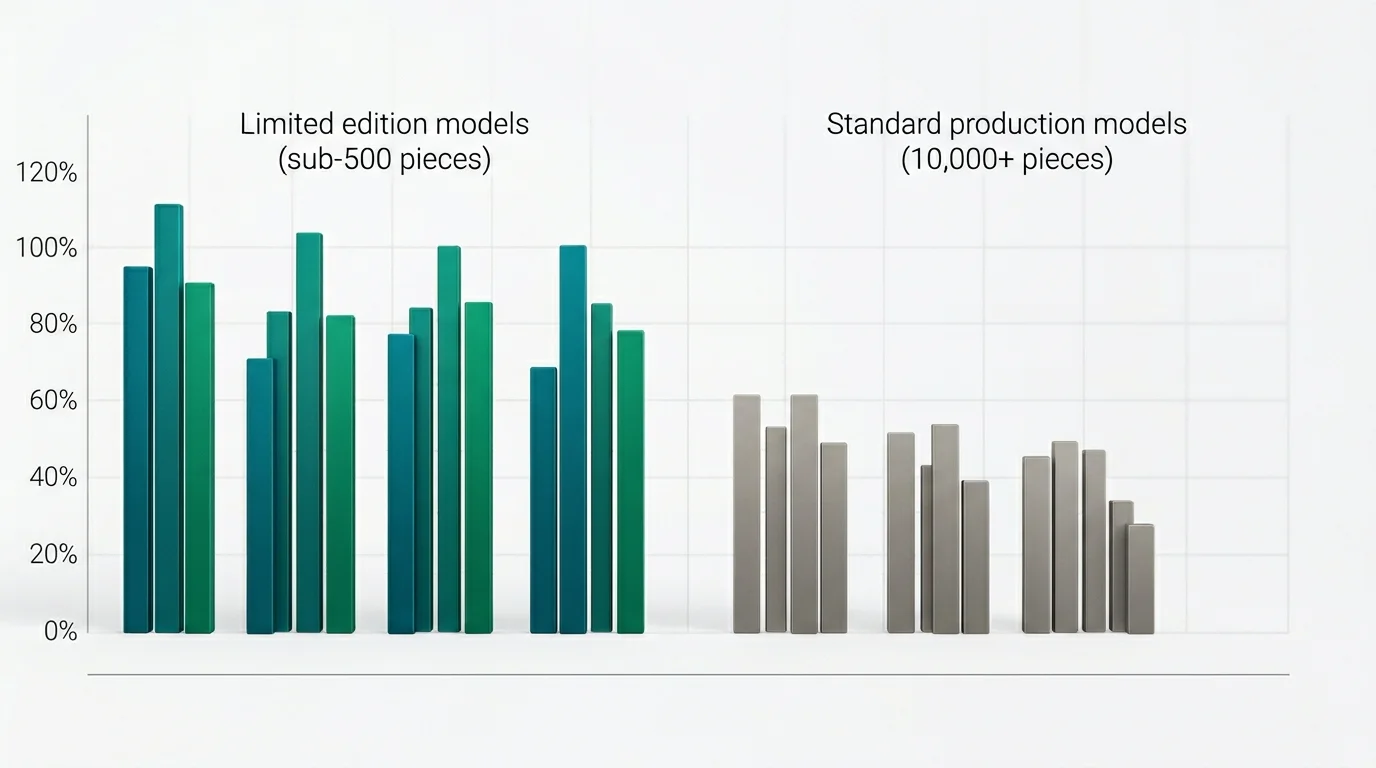
Limited editions do retain value more consistently than standard production runs, but the relationship isn’t linear. Over 1,200 limited-edition diecast models launched globally in a single year, each restricted to under 5,000 units; these tend to sell out within weeks, driving secondary market premiums of up to 300% (Accio). That’s the headline number. The reality is messier.
Numbered vs Unnumbered Limited Editions
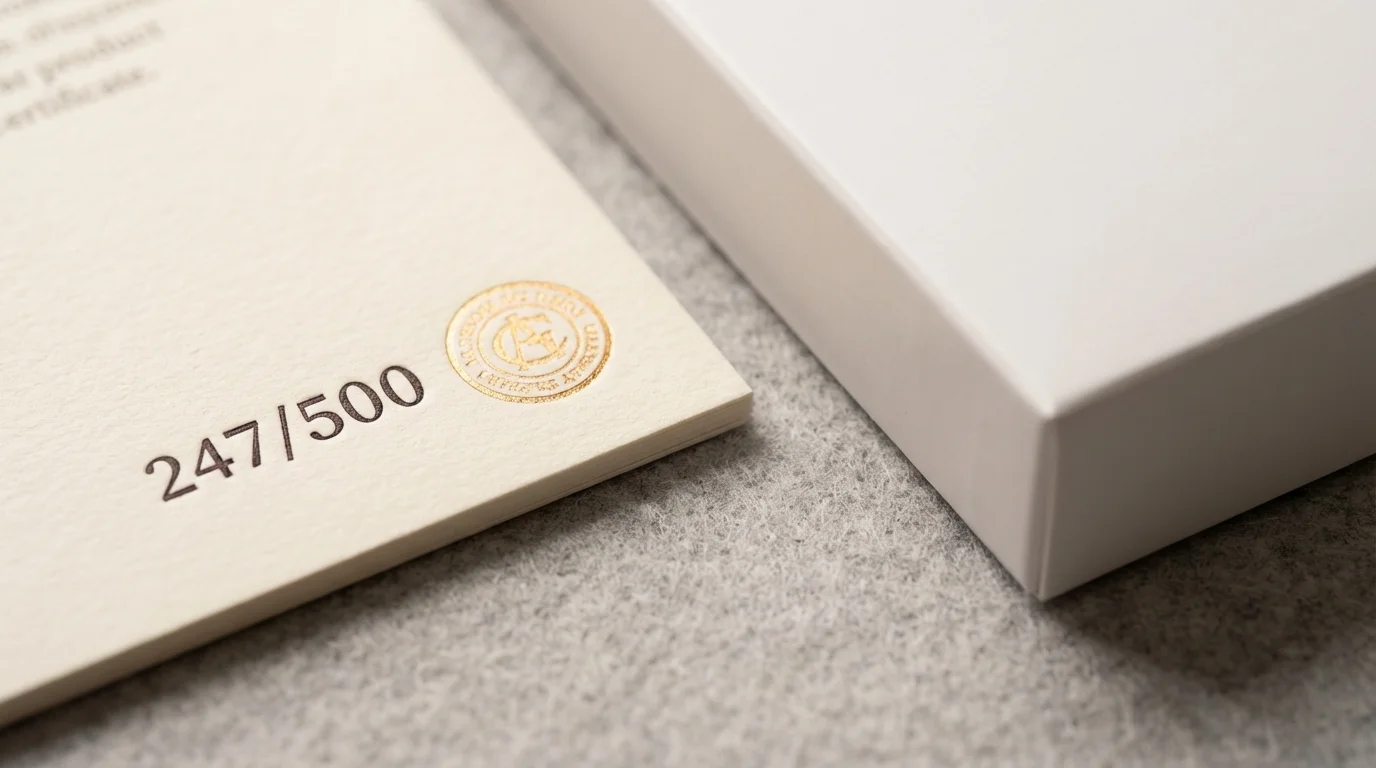
Does that little certificate with “#47 of 500” actually matter? From what we’ve seen, yes, it does, but perhaps not for the reason you’d think. Numbered editions signal that the manufacturer committed to a hard production cap. Unnumbered “limited” runs sometimes get quietly extended if demand warrants it. Collectors know this. A CMC Mercedes-Benz 300 SL W198 Softtop in a confirmed run of 1,500 units retails at around EUR 748 (CMC Official). It’s the certainty of scarcity, not just the number on the plaque, that supports the price.
We’ve handled both types extensively. Numbered pieces from established manufacturers like CMC or BBR tend to command a 10-15% premium over comparable unnumbered limited editions on the secondary market. But here’s the catch: if the manufacturer has a history of reliable production caps, unnumbered editions from that same brand can perform almost as well.
The Rarity Threshold: When Scarcity Starts Mattering
Not all limited editions are created equal. A run of 4,999 units doesn’t feel especially rare when thousands of collectors can still find one. From our years handling these models, the inflection point sits somewhere around 500 pieces or fewer for 1:18 scale. Below that number, secondary market activity picks up noticeably. Above 2,000 pieces, you’re essentially looking at standard-production value retention unless the subject car itself carries extraordinary appeal.
What about ultra-rare pieces? The Hot Wheels 1969 Pink Rear-Loading Beach Bomb, one of only a handful of prototypes, sold for roughly EUR 66,000 (USD 72,000) back in 2011 (Lot57 Supplies). Only two prototypes were ever made, and the estimated value now exceeds EUR 92,000 (Lot57 Supplies). That’s an extreme example, but it illustrates a principle: when scarcity crosses into true rarity (single digits), collectible models can outperform many traditional alternative investments.
Which Material Retains More Value: Diecast or Resin?
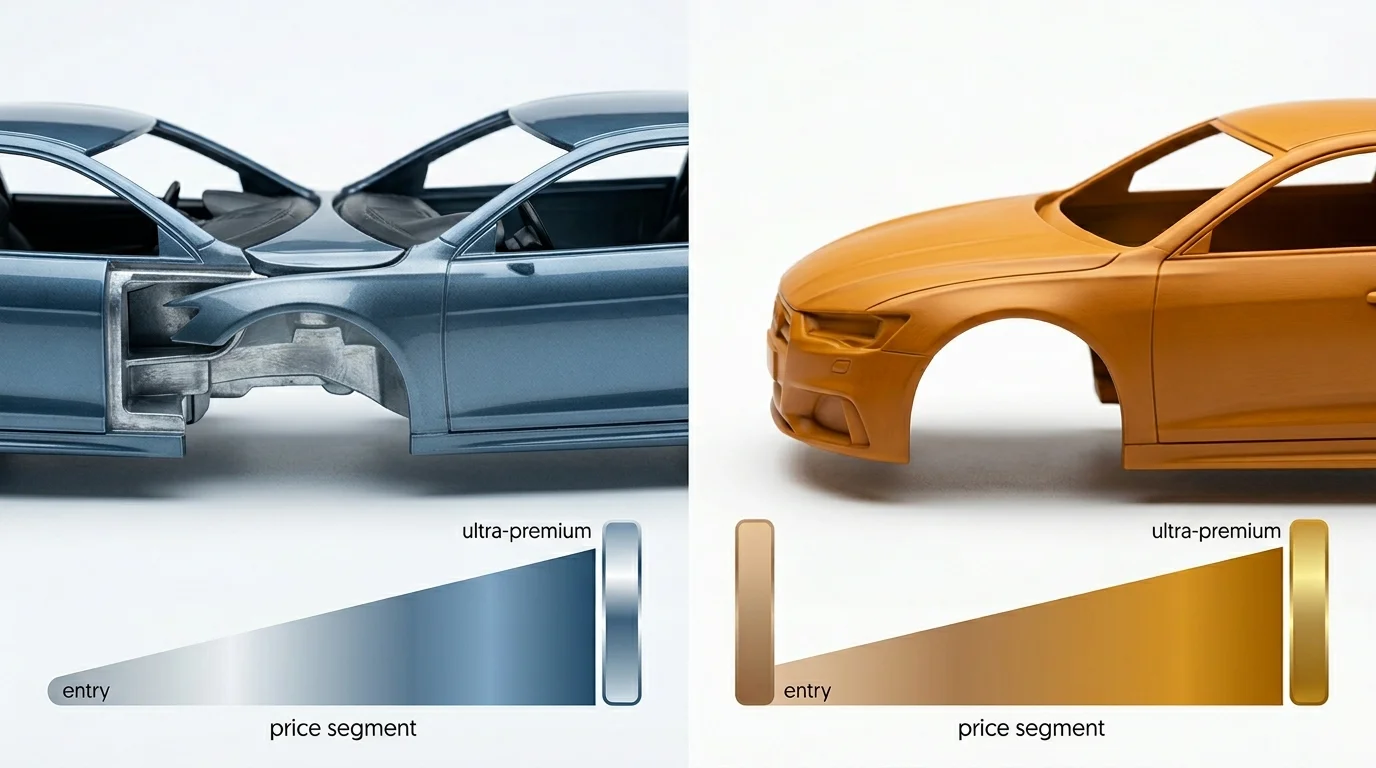
Material choice doesn’t affect resale uniformly across the price spectrum. In the entry-level bracket (under EUR 80), diecast dominates both supply and demand. In premium and ultra-premium territory (EUR 300+), resin models frequently outperform diecast on percentage value retention. It’s not that one material is inherently “better” for investment; the dynamics shift with the audience. For a deeper look at the fundamental differences between these materials, our diecast vs resin material fundamentals article covers the topic in detail.
Entry-Level Price Segment
At the entry level, we’re talking about brands like Solido, Maisto, and Bburago in 1:18 scale and mainstream 1:43 lines. These models retail between EUR 25 and EUR 70. Do they appreciate? Rarely. Most don’t hold more than 50-70% of their value after a few years. That said, they don’t lose everything: a collection of nine Kyosho 1:18 models (AC Cobra 427, Caterham Super Seven, Lotus Europa among them) sold at auction for approximately EUR 327 against an estimate of just EUR 62, a 5.3x multiple (Barnebys). Were those models individually valuable? Not particularly. But a well-curated lot of discontinued entry-level models can surprise you.
Honestly? If you’re buying entry-level diecast purely for resale, you’ll likely be disappointed. Buy them because you enjoy them. If they happen to become discontinued and you kept the box, that’s a bonus.
Premium and Ultra-Premium Segment
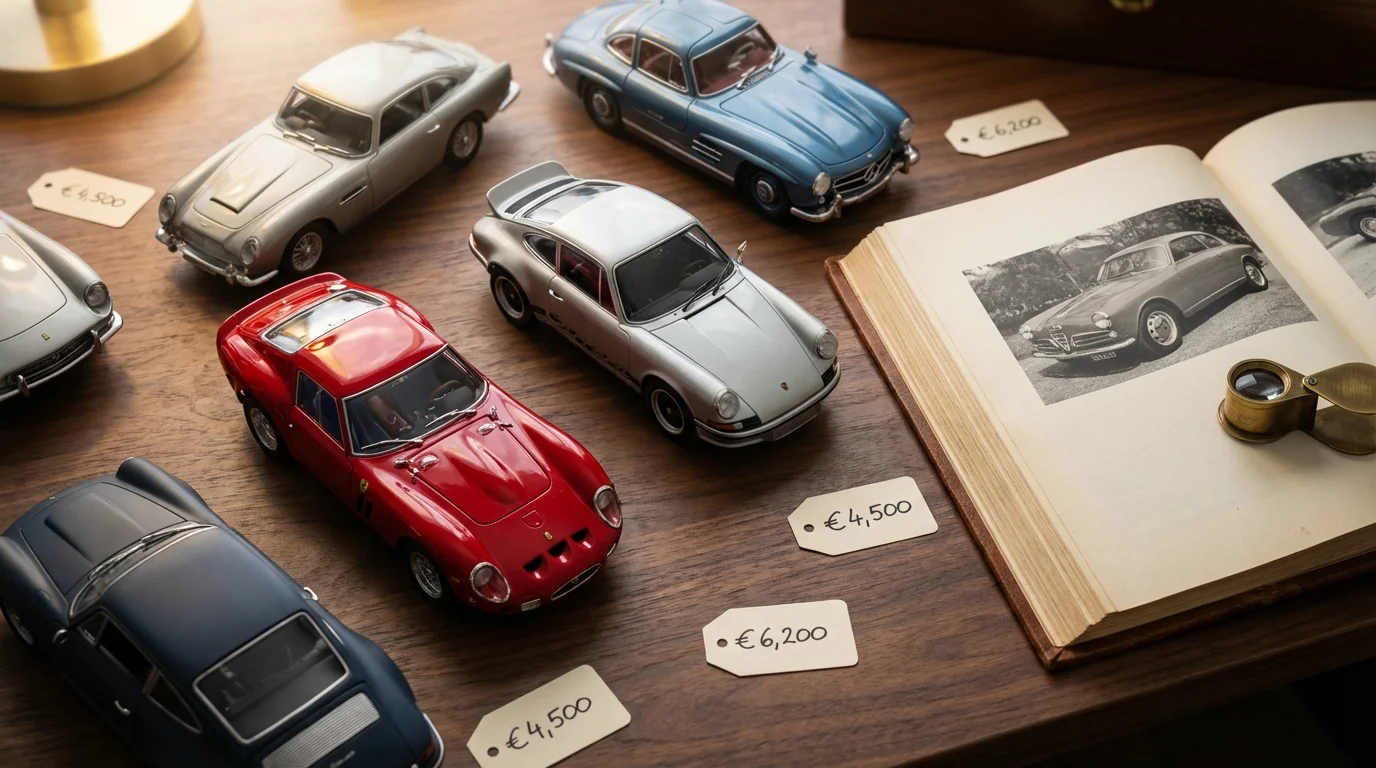
This is where things get interesting. CMC Ferrari 250 GTO models range from approximately EUR 580 to EUR 920 depending on variant (MyDiecastCars). The CMC Fiat 642 Bartoletti Ferrari Transporter commands around EUR 1,190 at retail (MyDiecastCars). These aren’t toys. They’re hand-assembled display pieces with hundreds of individual parts, and the secondary market treats them accordingly.
Resin models from manufacturers like BBR, Looksmart, and GT Spirit occupy a distinct segment. They’re sealed display pieces (no opening features, which means sharper body lines and better proportions) produced in runs of 500 to 3,000 units. From our experience, discontinued resin models from premium manufacturers retain 80-100% of retail and sometimes appreciate significantly. Why? Limited supply meets growing collector base. The global market saw limited-edition production increase 33% in a single year, and online sales grew 25% year-over-year (Business Research Insights). More collectors competing for fewer pieces pushes prices up.
Which Brands Show Strongest Value Retention?
Brand reputation is probably the single most predictable factor in model car value retention. Manufacturers that’ve built decades of history and consistent quality standards tend to hold value far better than newcomers or brands with uneven track records. For a full breakdown of how different manufacturers stack up, check our brand tier ranking.
Tier 1 Brands: Consistent Appreciation
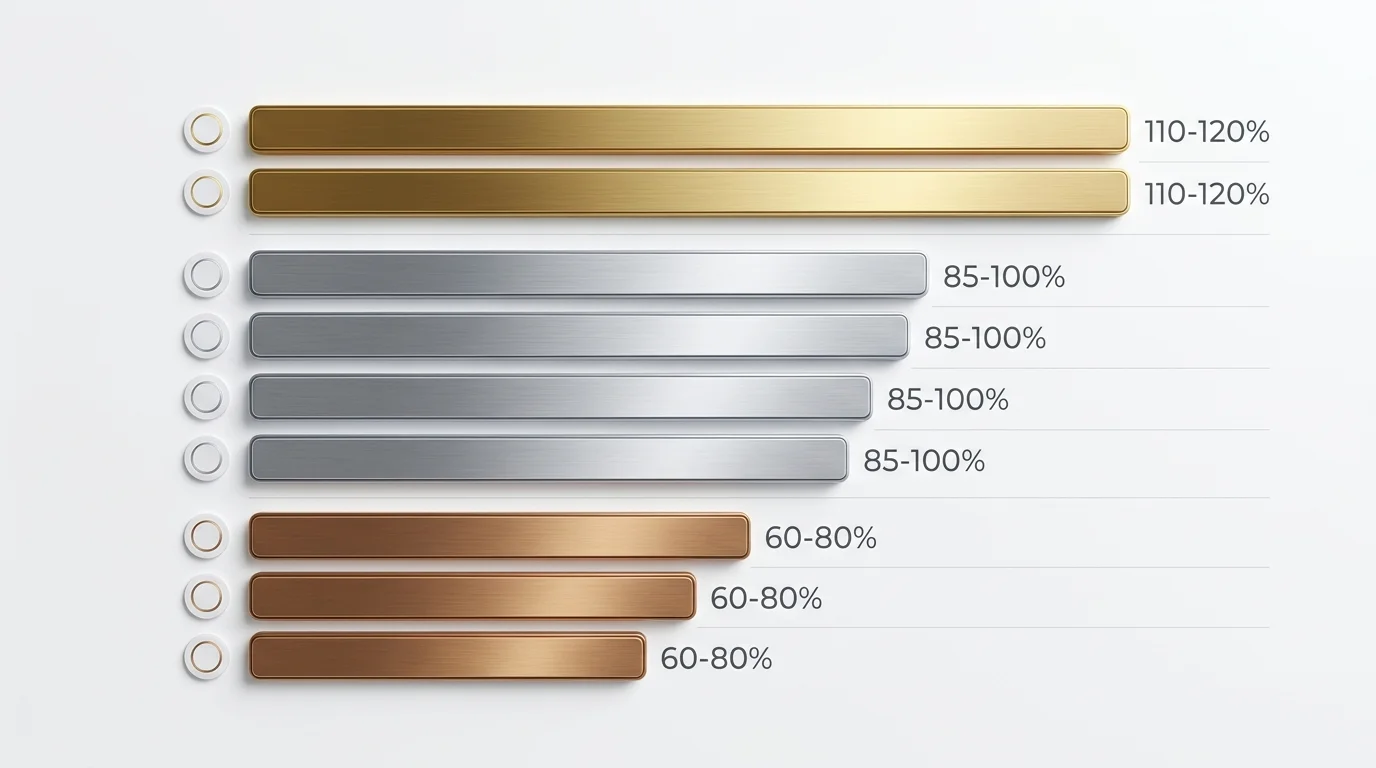
CMC sits at the top. Their current retail prices range from EUR 679 to EUR 935 for standard to premium editions (CMC Official). Discontinued models routinely sell above original retail. The CMC Mercedes-Benz 300 SLR Coupe Uhlenhaut (a miniature of the car that sold for EUR 135 million as a full-size original) retails at approximately EUR 549 (MyDiecastCars). Given the cultural significance of the subject car, we’ve noticed these particular pieces moving briskly on the secondary market.
Other brands we’d place in Tier 1 for value retention include BBR (resin, Italian craftsmanship, small runs), AUTOart (diecast and composite lines, particularly their discontinued Signature series), and Exoto (no longer in production, which has pushed secondary prices up considerably). Does being Tier 1 guarantee appreciation? No. But it dramatically improves the odds.
Mid-Tier Brands: Mixed Results
Brands like Minichamps, Spark, and Norev occupy an interesting middle ground. They produce good-quality models in reasonable quantities. Some specific releases appreciate (particularly motorsport liveries or limited-collaboration pieces), while the general catalog doesn’t tend to trade above retail.
| Brand Tier | Typical Value Retention | Key Factor | Risk Level |
|---|---|---|---|
| Tier 1 (CMC, BBR, Exoto) | 100-150%+ of retail | Small runs, hand-assembly, heritage | Low |
| Upper Mid (AUTOart, Minichamps LE) | 80-120% of retail | Quality consistency, collector loyalty | Low-Medium |
| Mid (Spark, Norev, GT Spirit [resin]) | 60-100% of retail | Subject car appeal, edition size | Medium |
| Entry (Solido, Maisto, Bburago) | 30-70% of retail | Discontinuation, nostalgia | High |
We’ve watched Minichamps Formula 1 models in 1:18 scale hold their value well when they’re the only manufacturer reproducing a specific livery. It’s not the brand alone that matters; it’s the intersection of brand quality and subject exclusivity. Have you noticed how a common road car in Minichamps tends to depreciate, while a rare racing livery from the same brand appreciates? That pattern shows up repeatedly in the data.
How Does Condition Affect Resale Price?
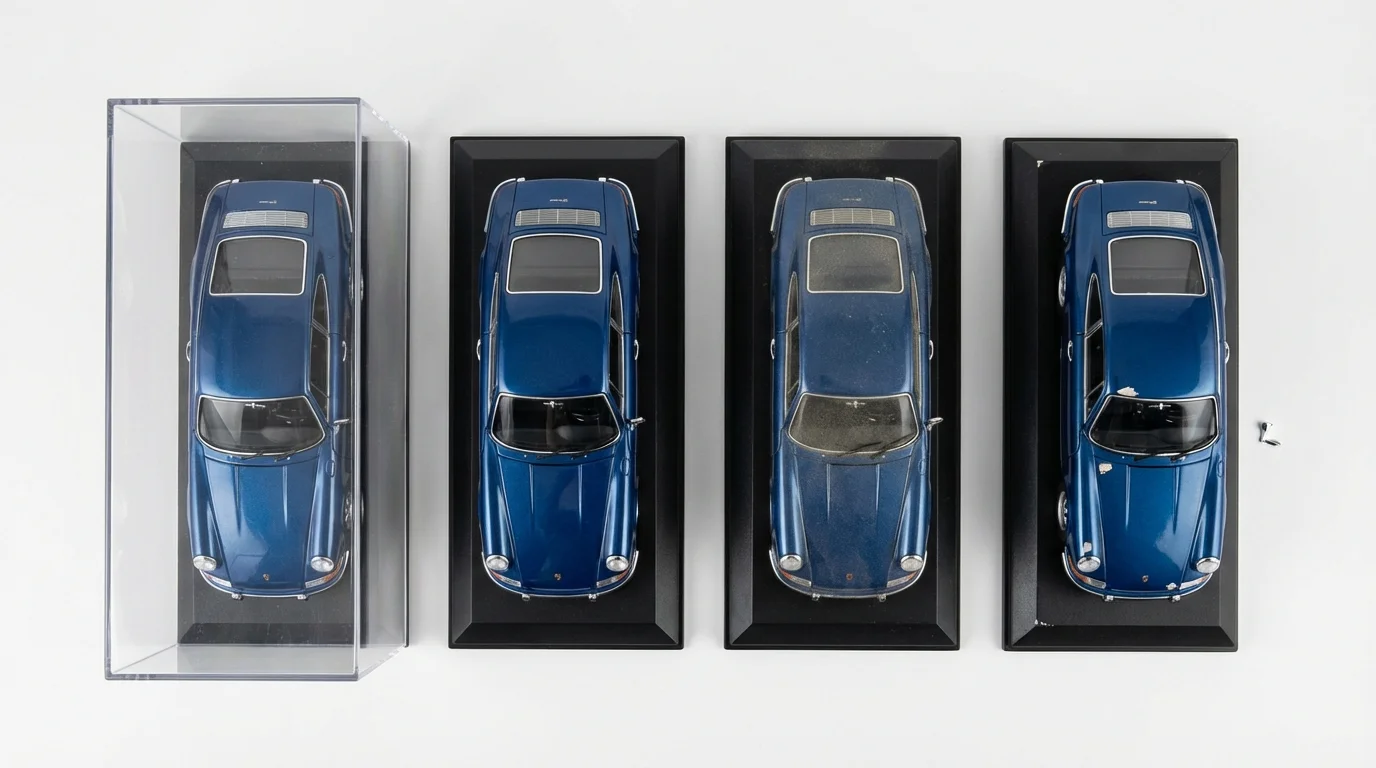
Original packaging increases diecast model value by 20% or more (DiecastParkingApp). That’s the floor estimate, not the ceiling. In our years handling pre-owned models, we’ve seen the spread between mint-in-box and displayed-without-box reach 40-60% on premium brands. Condition isn’t just a factor; for many auction buyers, it’s THE factor.
Mint in Box vs Displayed Without Box
Condition grading follows a standard hierarchy: Mint (perfect, original packaging), Near Mint (slight imperfections), Good (minor wear), and Poor (noticeable damage), with each tier significantly impacting price (STM Diecast). The jump from “Good” to “Mint” isn’t linear. We’d estimate it’s closer to exponential, particularly for models over EUR 200 retail.
Should you display your investment-grade models? That’s a question every collector wrestles with. Here’s our honest take: if you’re buying primarily for appreciation, keep them sealed. If you’re buying to enjoy, display them and accept the trade-off. Trying to do both usually means you don’t fully enjoy the model AND you still reduce its resale value. What’s the point of that?
The Completeness Factor: Accessories and Documentation
Beyond the box itself, completeness matters. Minor paint chips, missing parts, or damaged decals drastically reduce price (STM Diecast). For CMC models specifically, the certificate of authenticity, inner packaging foam inserts, and even the outer shipping carton all contribute to “complete” status. Missing an accessory that came standard? Expect a disproportionate hit to resale value.
We once handled a CMC model missing nothing but a single tiny mirror piece. It sold for roughly 25% less than an identical complete example the same week. Is that fair? It depends on your perspective. But the market’s message is clear: completeness commands a premium that far exceeds the cost of whatever’s missing.
Surprises and Outliers
Not everything follows the rules. A 1968 Hot Wheels store display with all Sweet 16 cars sold for approximately EUR 36,660 (USD 39,850) in November 2021 (Wheeljack’s Lab). Nobody would have predicted that when those cars retailed for under EUR 1 each. A 2019 Nissan Skyline GT-R BNR34 Hot Wheels with a factory error went for approximately EUR 11,960 (USD 13,000), purely because of a manufacturing defect (Wheeljack’s Lab). Errors, prototypes, and pre-production samples operate in a parallel market where traditional valuation models don’t apply.
On the premium side, we were surprised by how strongly motorsport liveries perform across brands. A five-lot set of boxed Minichamps models (including a Porsche 956L and Lotus Renault 97T) sold for approximately EUR 160 against a EUR 61 estimate, a 2.6x multiple (Barnebys). Racing liveries tap into motorsport nostalgia in ways that standard road-car colors simply don’t. If someone told us ten years ago that a Minichamps Porsche 956 Le Mans livery would outperform a standard-color CMC road car on percentage return, we wouldn’t have believed it. Yet here we are.
What other outliers caught our attention? Vintage models from the 1950s and 1960s (brands like Dinky and Corgi) occupy their own collector universe. The Corgi James Bond Aston Martin DB5 from 1965 commands premium prices driven by rarity and cultural significance (STM Diecast). These pieces transcend the model-car market entirely; they’re pop-culture artefacts.
Implications and Recommendations
The data tells us that scale model cars can retain and sometimes appreciate in value, but they’re better understood as a passion investment than a pure financial instrument. Diecast models are better suited for long-term holds (years to decades) rather than quick flips (DiecastParkingApp). If you’re looking for liquid, predictable returns, index funds will serve you better. But if you love the hobby and want to be smart about what you acquire, the patterns above can guide your decisions.
For New Collectors
If you’re just starting out, don’t overthink the investment angle. Seriously. Buy models that excite you from reputable brands, keep the original packaging, and store them properly. For practical guidance on storage and display, our guide to protecting your collection’s condition covers the essentials. If you’re entirely new to the hobby, our beginner’s guide to starting a collection is a solid starting point.
A few concrete suggestions:
- Start with 1:18 or 1:43 scale, as these have the deepest secondary markets and the most active collector communities
- Prioritize discontinued or limited models from Tier 1 and upper-mid brands over new releases from entry-level manufacturers
- Keep every piece of packaging, documentation, and accessories, even if it seems unimportant
- Track what you paid and when; a simple spreadsheet beats memory every time
For Experienced Collectors
You already know condition matters and boxes shouldn’t be thrown away. Here’s what the data suggests for optimizing value:
- Resin models from premium manufacturers (BBR, Looksmart) in runs under 500 pieces show the strongest appreciation curves
- Motorsport liveries consistently outperform standard road-car colors on percentage return, even from mid-tier brands
- Cross-reference your collection against the Barnebys auction database periodically to track current market values
- Watch for manufacturer announcements of production cessation; models that become “last ever” from a brand see immediate secondary market spikes
- Consider the broader luxury collectibles context: the Knight Frank Luxury Investment Index showed a 72.6% increase over the past decade across 10 collectible asset classes (MyArtBroker)
Frequently Asked Questions
Are scale model cars a good financial investment?
It depends on what you mean by “good.” Premium limited editions from Tier 1 brands have shown appreciation comparable to other luxury collectibles over decade-long holding periods. But they’re illiquid, condition-sensitive, storage-dependent, and unpredictable on a model-by-model basis. We’d call them a strong passion investment with real upside potential, not a replacement for diversified financial assets. If you wouldn’t enjoy owning the model regardless of its resale value, it’s probably not the right purchase.
How do I find market values for my models?
Start with completed auction listings on platforms like Barnebys, which aggregates results across multiple auction houses. eBay’s completed listings filter is useful for more common models. For premium pieces, specialist forums and collector groups often have better price intelligence than general auction sites. We’ve found that averaging three to five recent comparable sales gives a more reliable estimate than relying on any single data point.
Which scales tend to hold value best?
1:18 and 1:43 are identified as the primary collector scales with strongest resale demand (DiecastParkingApp). 1:18 benefits from display presence and a broad manufacturer base. 1:43 benefits from the European motorsport tradition and the ability to build large collections in limited space. 1:12 is a growing ultra-premium niche where select pieces appreciate strongly, but the market is thinner and less liquid.
How should I cite data from this analysis?
We’ve linked our primary sources throughout the article. If you want to reference specific data points, please cite both the original source (named in parentheses throughout the text) and this analysis. We don’t claim ownership of the underlying auction data; we’ve simply compiled and interpreted publicly available results to identify patterns that individual collectors might miss when looking at one sale at a time.
Data Appendix

| Source | Data Type | Sample / Coverage | Limitation |
|---|---|---|---|
| Barnebys Auction Database | Hammer prices, 1:18 scale | 1,507 sold lots | Excludes unsold lots and private sales |
| GlobeNewsWire Market Report | Market sizing, CAGR projections | Global diecast market | Forward projections, not actual results |
| Business Research Insights | Market share, segment data | Automotive diecast segment | Estimates based on modelling |
| CMC Official / MyDiecastCars | Retail pricing | Current CMC catalog | Retail only, not secondary market |
| Wheeljack’s Lab | Top auction results (Hot Wheels) | Top 10 sales documented | Skewed toward extreme outliers |
| MyArtBroker | Luxury collectibles index | 10 asset classes, decade span | Aggregated index, not model-specific |
Adult collectors account for approximately 60% of global purchases, representing around 192 million units annually (Accio). Premium collectible models saw a 32% increase in unit sales year-over-year, while manufacturing costs rose 8% due to material and labor expenses (Business Research Insights). These macro trends suggest a market where demand growth is outpacing supply growth, which is generally supportive of value retention for quality pieces.
For context beyond the diecast world: classic cars appreciated 25% in a single year (the highest in 9 years), fine art saw 29% appreciation with approximately EUR 58 billion in total auction sales, and watches showed 18% growth in the same period (MyArtBroker). Scale model cars won’t match those headline numbers, but the underlying collector psychology, the willingness to pay a premium for rare, well-preserved objects with emotional significance, hasn’t changed.