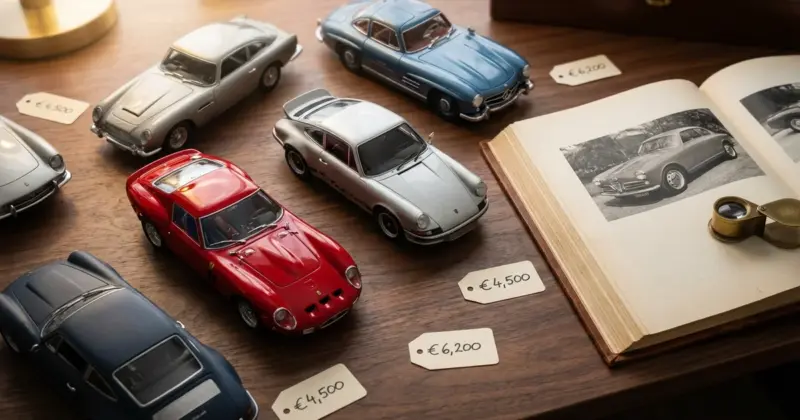
We’ve spent years handling thousands of diecast and resin models, and here’s what we’ve learned the hard way: buying a beautiful model is only half the equation. The other half? Keeping it that way. Whether you’ve just picked up your first 1:18 Norev or you’re managing shelves of limited-edition GT Spirit pieces, the care you give your model car display case determines how those models look five, ten, or twenty years from now.
So what actually damages collectible models? It’s not what most people expect. Dust, UV exposure, humidity, and improper handling cause more harm than accidental drops. We’ve seen collections worth thousands lose significant value simply because the owner didn’t know that resin yellows permanently under sunlight. This guide covers the practical steps we recommend to every collector, whether you’re protecting diecast or resin models or both.
TL;DR: Use enclosed display cases with UV-filtered glass to cut dust by over 90% (Drool Over Diecast). Keep humidity under 60%, temperature between 18°C and 22°C, and clean diecast with microfiber cloths and lukewarm water only. Never use solvents. Resin yellowing from UV is permanent (Resiners). Handle resin by the base, never the body.
Quick Reference Table: Material x Care Aspect
Before we go deeper into each topic, here’s a quick-reference matrix. We keep a printed copy of something similar near our own shelves, and it’s saved us from more than a few mistakes.
| Care Aspect | Diecast (Metal Zamak) | Resin (Polyurethane) | Composite (Metal + Resin/Plastic) |
|---|---|---|---|
| Dusting | Microfiber cloth, lukewarm water | Soft brush only, no liquids on body | Microfiber for metal, soft brush for resin parts |
| Deep Cleaning | Lukewarm water + mild soap, ~30 seconds (Auto World Store) | Avoid submersion entirely | Spot clean metal, dry-brush resin sections |
| UV Sensitivity | Moderate (paint fading) | High (permanent yellowing) | Mixed (metal low risk, resin parts high risk) |
| Humidity Threshold | Below 60% (zinc pest risk above 65%) (Wikipedia) | Below 60% | Below 60% |
| Handling | Lift by chassis or base | Base ONLY (fingerprints are permanent) (DiecastXchange) | Lift by metal chassis, avoid resin panels |
How to Clean Your Models Without Damage
The safest cleaning material for diecast paint is a microfiber cloth (STK Model Car). That’s the starting point for everything. But what works perfectly on diecast can ruin a resin model, and we’ve seen collectors learn this the hard way. Can you really use the same cleaning approach for every model in your collection? Absolutely not. Material dictates method.
In our experience, regular weekly dustings prevent the kind of heavy grime buildup that forces aggressive cleaning later (Auto World Store). Prevention beats treatment every single time.
Diecast Cleaning
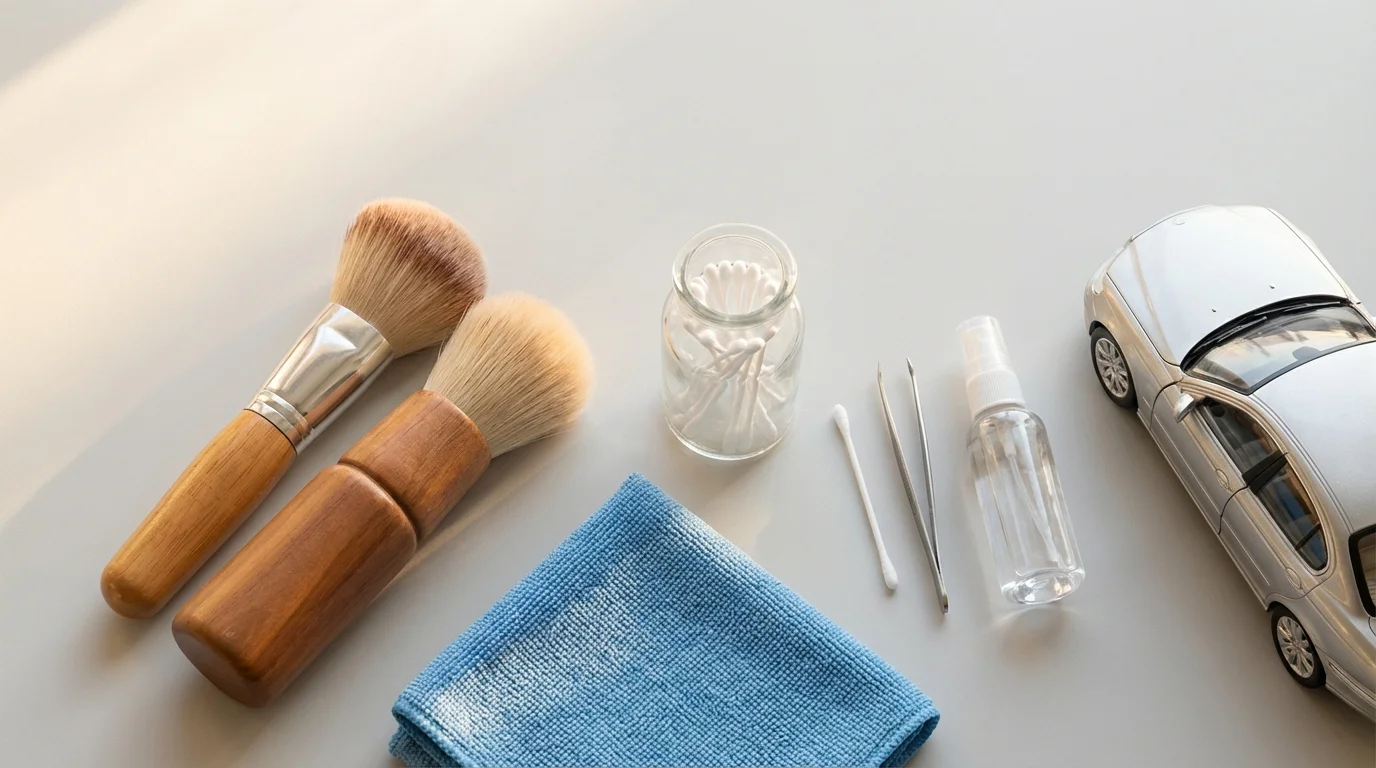
For light dusting, a microfiber cloth with a dab of lukewarm water does the job (Auto World Store). That’s it. No sprays, no chemicals. For deeper cleaning, you can submerge the model in lukewarm water with mild soap for approximately 30 seconds (Auto World Store). Use cotton swabs for tight spots around mirrors and door handles, and plastic toothpicks for crevices where dust collects.
Here’s what you should never do: use solvents or alcohol on diecast. They’ll damage the paint (Auto World Store). We’ve had customers bring in models with cloudy, stripped finishes from using household cleaners. Also avoid paper towels or stiff brushes, as they scratch the paint surface (STK Model Car). After washing, dry with a cloth or a blow dryer on low heat. Never place a wet model in direct sunlight to dry (Auto World Store).
Want to avoid mineral deposits? Use distilled water instead of tap water (STK Model Car). It’s a small detail that makes a noticeable difference on dark-coloured models.
Resin Cleaning
Resin models require a completely different approach. Since they’re sealed display pieces (no opening parts), there’s less surface area exposed to dust. But fingerprints on resin surfaces can become permanent (DiecastXchange). That’s not a scare tactic; it’s chemistry.
We recommend a very soft, dry brush for routine dusting. Never submerge a resin model in water (STK Model Car). If you need to remove a smudge, a barely damp microfiber cloth works, but wring it out thoroughly first. Cotton gloves are recommended when handling resin models to avoid leaving oils on the surface (DiecastXchange). For a deeper understanding of how these materials differ, check out our diecast vs resin material guide.
Composite and Mixed-Material Cleaning
Composite models (like those from AUTOart) combine metal bodies with resin or plastic interiors. Treat each section according to its material. The metal exterior can handle a damp microfiber cloth. The interior and any resin trim should only get a dry brush. It’s a bit more effort, but these models aren’t cheap, so they’re worth the extra care.
UV Protection: Preventing Yellowing and Fading
UV rays break down chemical bonds in resin, causing yellowing (Resiners). This isn’t a theoretical risk; it’s the single biggest threat to resin model collections. And here’s the part most collectors don’t realize until it’s too late: yellowing is permanent. Once the chemical change happens, you can’t reverse it (Resiners). No amount of cleaning, coating, or polishing will bring back a yellowed resin body.
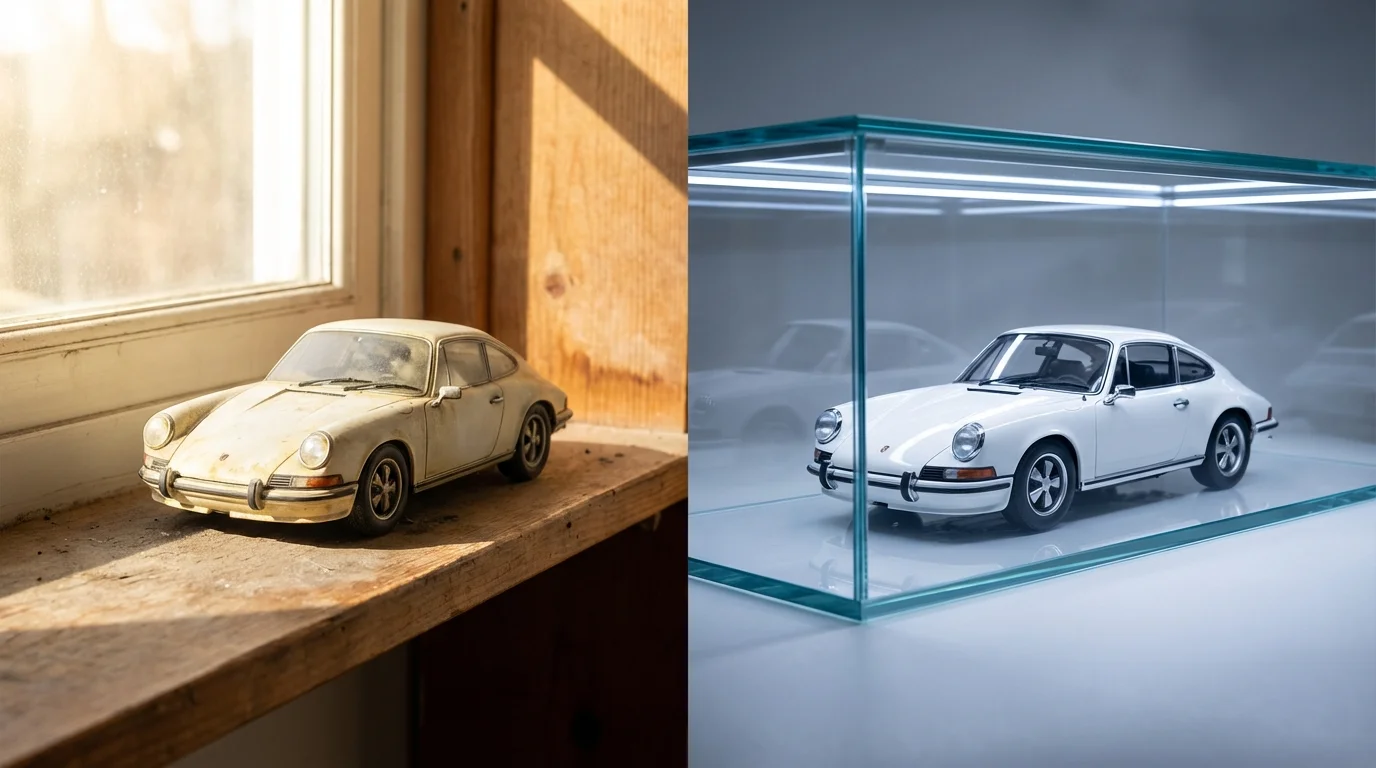
The science behind it is straightforward: UV-induced photodegradation breaks down the bisphenol-A groups in epoxy resin systems (ScienceDirect). Thermal aging above 80°C accelerates the process further (ScienceDirect). UV stabilizers like HALS and benzotriazole compounds can delay yellowing, but they won’t prevent it indefinitely (ScienceDirect). Higher-grade resins with built-in UV stabilizers take much longer to discolour, while cheaper craft resins may show yellowing in just weeks (Resiners).
So what should you actually do? UV-filtered glass display cases are essential for resin models placed anywhere near windows (Drool Over Diecast). We’ve seen too many collections where one shelf near a window turned yellow while the rest stayed pristine. If you’re investing in models from top-tier brands like GT Spirit or BBR, protecting them from UV isn’t optional. Store models in a cool, dark place when not displayed, and consider applying UV stabilizer sprays or topcoats as an additional layer (Resiners).
Does this matter for diecast too? It depends on your priorities. Diecast won’t yellow, but UV exposure can fade paint and decals over time. The risk is lower, but it’s still there. Your mileage may vary based on how much direct sunlight your display area gets.
Humidity and Temperature Control
Keep humidity below 60% to prevent corrosion on diecast models (Drool Over Diecast). That’s the threshold we recommend to every customer who asks. But what happens if humidity climbs above that?
For diecast, the concern is zinc pest. Humidity above 65% accelerates this destructive process (Wikipedia). Zinc pest is caused by impurities in the zinc alloy, specifically lead, cadmium, and tin (Wikipedia). The problem was first identified in 1923 and primarily affected die-cast articles from the 1920s through the 1950s (Wikipedia). Post-1960 articles are usually safe thanks to purer materials, but there’s been a resurgence in replicas made since the mid-1990s (Wikipedia). And here’s the unsettling truth: zinc pest is irreversible once it starts. No cure exists (DiecastXchange). Collectors have tried dark storage, oil coatings, and humidity control as prevention, but none of these methods work once the process has begun (DiecastXchange).
The ideal temperature range for model storage is 18°C to 22°C (Drool Over Diecast). Heat during storage speeds up resin discolouration (Resiners), while oxidation from oxygen exposure causes slow yellowing over time (Resiners). We believe a simple hygrometer near your display cabinet is one of the best investments you can make. It won’t save a model, but it’ll warn you before conditions become damaging.
Display Solutions: Open Shelf vs Enclosed Case
Enclosed display cases reduce dust accumulation by over 90% (Drool Over Diecast). That single statistic should settle the debate for most collectors. But is an enclosed case always the right choice? In our opinion, it depends on your space, budget, and collection size.

| Feature | Open Shelf | Acrylic Case | Glass Cabinet |
|---|---|---|---|
| Dust Protection | None | Excellent | Excellent |
| UV Protection | None | Moderate (some filter UV) | High (with UV-filtered glass) |
| Visibility | High | High | High |
| Wall Mounted Option | Yes | Yes | Limited |
| LED Lighting Compatible | Yes | Yes | Yes |
What we’ve noticed among our customers is that beginners often start with open shelves because they’re affordable and accessible. That’s fine for a small diecast collection in a room with minimal dust. But once you’ve built up even a modest collection, the weekly dusting becomes a real chore. Enclosed cases save you time and protect your models simultaneously.
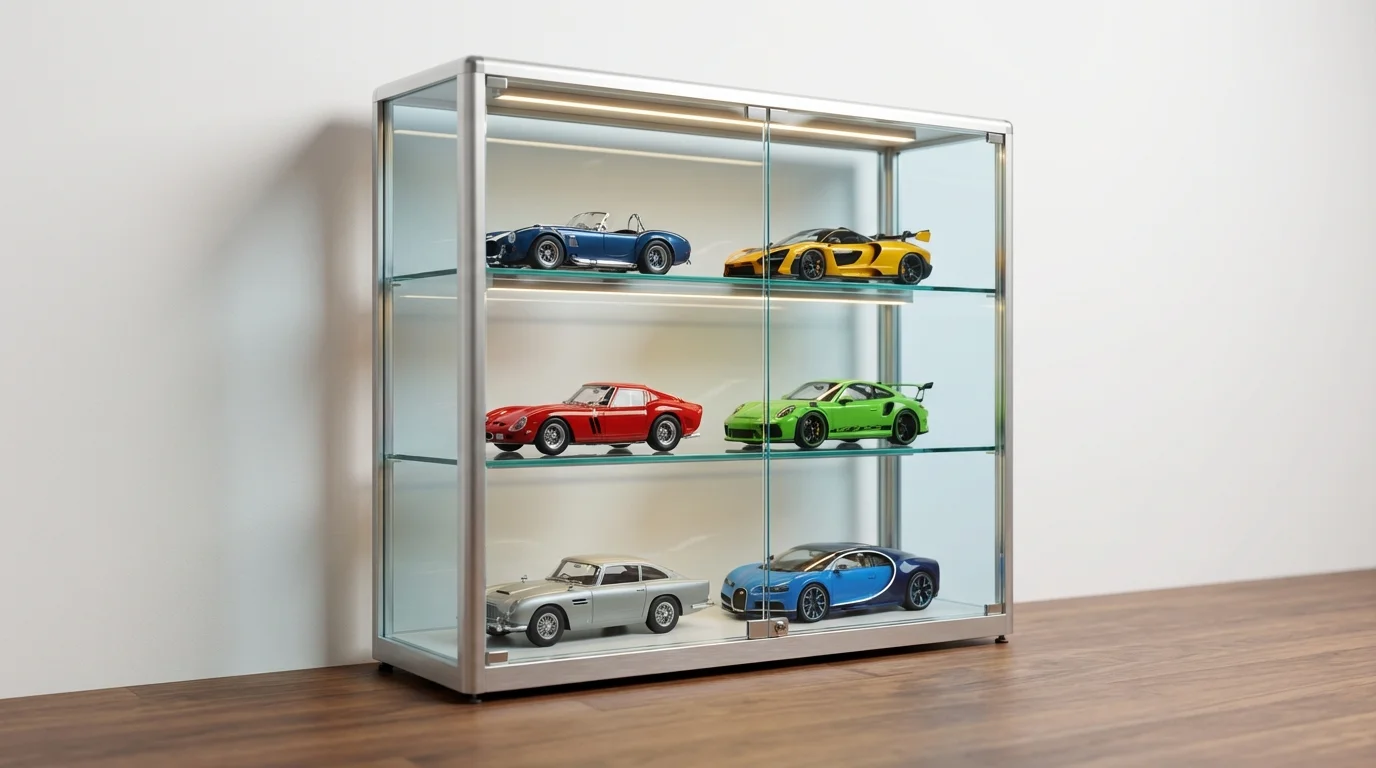
For 1:18 scale display, glass cabinets with adjustable shelves work best. They accommodate the height of larger models and let you arrange everything without crowding. For 1:24 scale, acrylic cases with stackable modules are a practical option. LED lighting inside the case makes a huge visual difference, and we’ll address whether it causes UV damage in the FAQ section below.
Handling Your Models Safely
Handle resin models by the base only. Fingerprints on sealed resin surfaces are permanent (DiecastXchange). That’s not an exaggeration. We’ve seen models returned where clear handprints had bonded with the finish. Cotton gloves are recommended for resin models (DiecastXchange), and from our experience, they’re worth every cent.
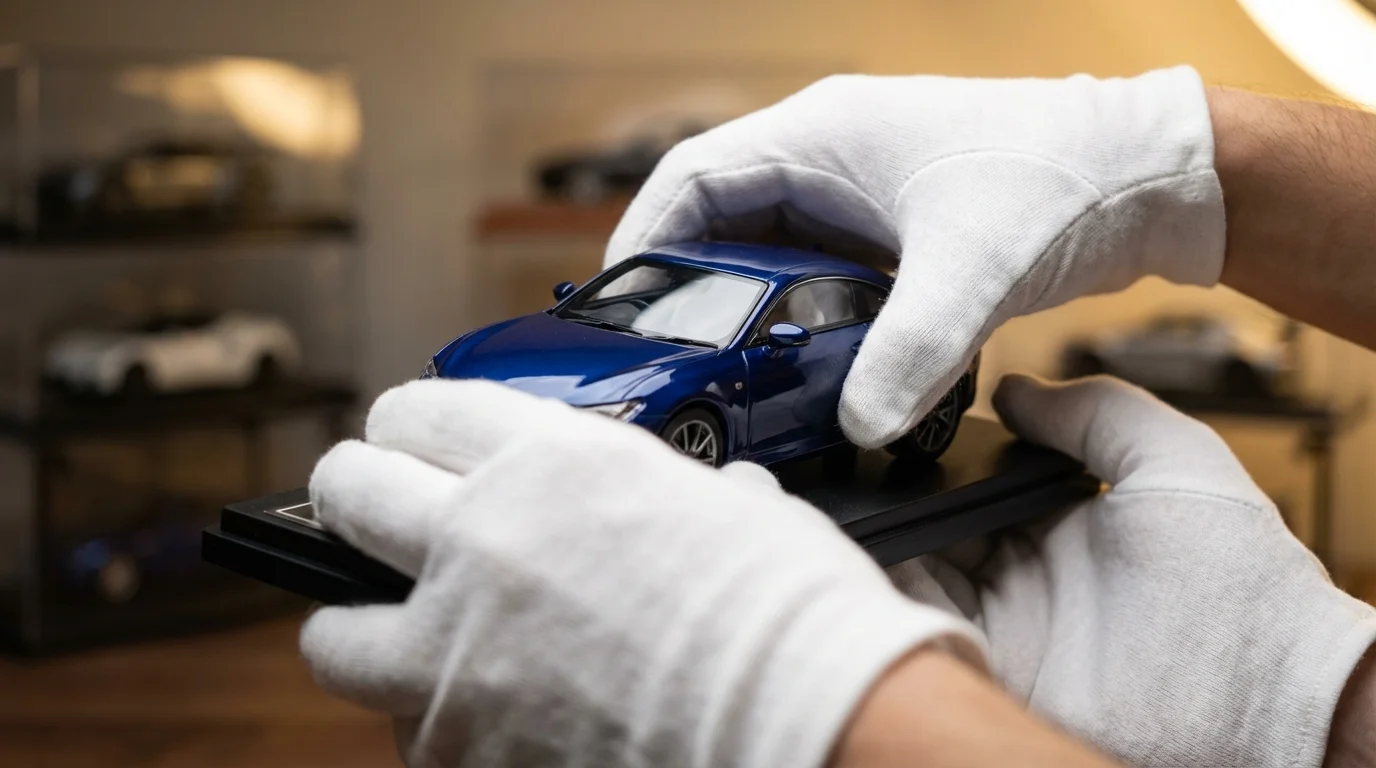
Diecast models are more forgiving, but that doesn’t mean you should grab them carelessly. Lift by the chassis or base whenever possible. The opening features on diecast (doors, hoods, trunk lids) are fragile at 1:18 scale. Hinges bend. Mirrors snap off. We’ve packed enough replacements to know that rough handling is the number-one cause of broken parts on diecast models.
Have you ever tried moving a shelf full of models without a plan? Don’t. Remove models individually, wrap each one, and transport them upright. Laying models on their sides stresses suspension components and can bend antennas or spoilers that were never designed to bear weight from that angle.
Common Care Mistakes That Damage Collections
From what we see, these mistakes come up over and over again. They’re easy to avoid once you know about them, but surprisingly common even among experienced collectors:
- Using paper towels instead of microfiber (scratches paint) (STK Model Car)
- Placing models in direct sunlight (causes permanent resin yellowing and paint fading) (Resiners)
- Storing models in garages or attics where temperature fluctuates wildly
- Submerging resin models in water (damages finishes) (STK Model Car)
- Throwing away original packaging (reduces resale value by 20% or more) (Drool Over Diecast)
That last point deserves emphasis. Original packaging preservation adds over 20% to resale value (Drool Over Diecast). Even if you don’t plan to sell, keeping the box, foam inserts, and any certificates or booklets protects the model during any future move and maintains its collectability.
Emergency Repairs: Fixing Common Damage
Sometimes things go wrong despite your best efforts. A door snaps off. A mirror breaks. A decal peels. What can you actually fix at home? Quite a lot, in our experience, though we’d advise caution before attempting anything on a valuable limited-edition piece.
For broken hinges on diecast opening parts, a tiny drop of cyanoacrylate (super glue) applied with a toothpick often works. Hold the part in place for 60 seconds and avoid excess glue, as it’ll fog clear plastic windows nearby. For peeling decals, a thin layer of clear nail varnish applied with a fine brush can reseal the edges. Neither of these is a museum-grade repair, but they’ll restore a display model to presentable condition.
Can you fix resin yellowing? Unfortunately not. Yellowing is permanent once the chemical change has occurred (Resiners). There’s no topical solution that reverses it. Prevention through UV-filtered cases is the only strategy. Similarly, zinc pest is irreversible once it’s started (DiecastXchange), so monitoring humidity is critical for vulnerable older models.
Frequently Asked Questions
What is the safest way to remove dust from scale models?
A microfiber cloth with a dab of lukewarm water is safest for diecast (Auto World Store). For resin, use a dry, soft-bristled brush only. Cotton swabs reach tight spots around mirrors and trim. Regular weekly dustings prevent buildup that forces more aggressive cleaning later. Never use compressed air at full pressure, as it can snap fragile antennas and mirrors.
Can I use glass cleaner on display case windows near models?
Clean the glass with the case doors open and models removed if possible. Glass cleaner spray can drift onto model surfaces, and the ammonia in many formulas damages diecast paint finishes. If removing models isn’t practical, spray the cleaner onto a cloth rather than directly onto the glass, then wipe carefully. This prevents chemical mist from settling on your collection.
How often should I clean my model car collection?
For models in enclosed cases, a light dusting every four to six weeks is typically sufficient. Open-shelf models need weekly attention (Auto World Store). How quickly dust accumulates depends on your room, ventilation, and whether you have pets. We’ve found that collectors who set a regular schedule stick with it longer than those who wait until dust is visible. If you’re new to collecting, our beginner’s collecting guide covers setup basics.
Do LED display lights cause UV damage to models?
Standard LED strip lights emit negligible UV radiation, making them safe for long-term model display. They’re a much better choice than halogen or fluorescent bulbs, which emit measurable UV. That said, there are exceptions: some ultra-bright or “daylight” LEDs can produce trace UV. Stick with warm-white LED strips rated below 4000K for the safest option. Heat output from LEDs is also minimal, which avoids the temperature-related concerns that affect resin (Resiners).
How should I store models during a move or relocation?
Wrap each model individually in acid-free tissue paper or soft microfiber cloths. Place them upright in their original packaging whenever possible (original packaging preservation adds over 20% to resale value (Drool Over Diecast)). If original boxes aren’t available, use sturdy cardboard boxes with dividers between models. Never stack models on top of each other, and mark boxes as fragile. Transport in a climate-controlled vehicle if possible.
Conclusion: Building a Sustainable Care Routine
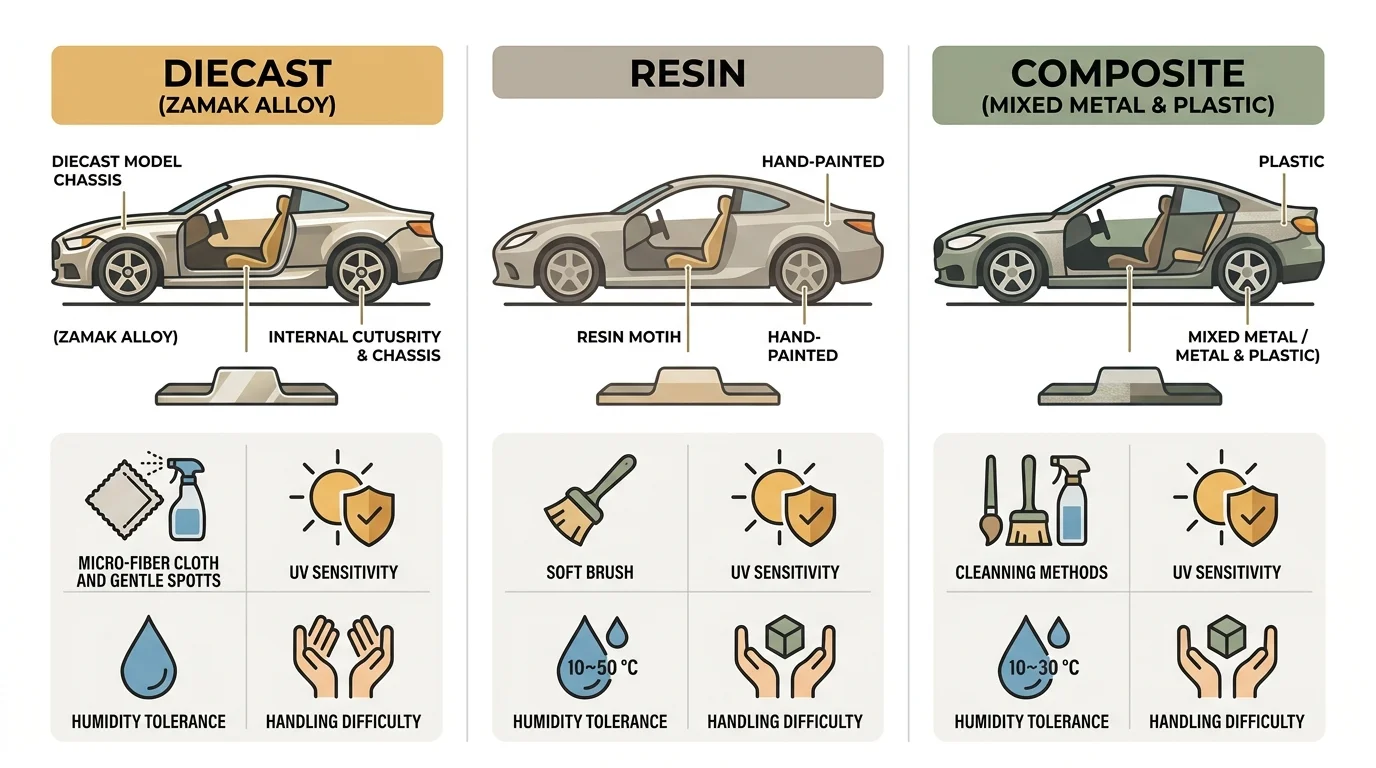
Protecting a model car collection doesn’t require expensive equipment or professional skills. It requires consistency. The Quick Reference Table at the top of this article covers the essential rules by material type, and implementing those guidelines takes minutes per week. We’ve watched collectors build stunning displays that look perfect years later, simply because they followed these basics from day one.
The core principles are simple. Use enclosed cases with UV-filtered glass. Keep humidity under 60%. Handle resin by the base with cotton gloves. Clean diecast gently with microfiber and lukewarm water. Keep original packaging. That’s the foundation of proper care, and it directly impacts preserving your collection’s long-term value.
Your models aren’t just objects on a shelf. They’re a curated collection that reflects your taste and passion. A few minutes of care each week ensures they’ll still look factory-fresh when you decide to pass them on, sell them, or simply admire them for another decade. Start with the table, build your routine, and your collection will thank you.