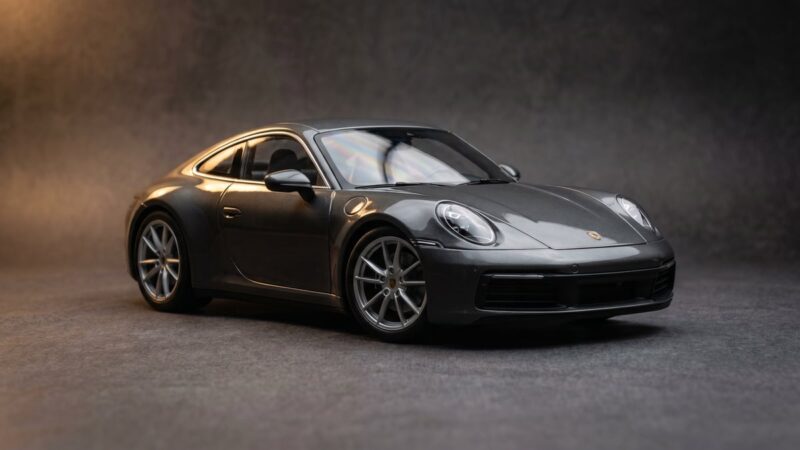
Yes — Norev is worth collecting if you want solid diecast with opening features at an accessible price. Norev is a long-established French manufacturer, founded by the Veron brothers near Lyon, and its name is simply Veron spelled backwards. Its core collector lines are diecast zamak, not resin; only some heritage and toy lines are plastic, so the material should be read per release. Because the core is diecast, you generally get the metal heft and the opening doors, bonnet and boot that sealed-resin houses do not offer.
In our catalogue Norev is the fourth most numerously represented manufacturer and the leading strong-value diecast house, sitting behind the premium diecast leader Minichamps and the two resin flagships GT Spirit and OttOmobile, and ahead of the entry-tier IXO. That positioning — value rather than premium — is exactly why it is a common starting point for new collectors. Buy it for enjoyment rather than guaranteed appreciation, keep it dusted with a soft cloth and only mild soap and water, and reach for a premium house when detail matters more than an accessible price. The rest of this review covers Norev’s heritage, settles the diecast-or-resin question, places it among the collector brands, and helps you decide whether it is for you.
Who Norev is: a French manufacturer with deep diecast heritage

Norev is one of the historic French manufacturers, named alongside Solido and Majorette as the well-known French producers of the classic diecast era. Knowing where it came from explains why it sits where it does in the range today.
The name and the origin
Norev was founded by the Veron brothers in Villeurbanne, near Lyon, in 1946, and the name is the family name Veron spelled backwards. Its official catalogue presents the company as making both collector cars and children’s toys, spanning scales from 1:12 through 1:18, 1:43, 1:64 down to 1:87, plus toy lines such as garages, circuits and play mats. It is, in other words, a broad French house rather than a narrow premium specialist.
From Rhodialite plastic to zamak metal
The first Norev vehicles appeared in 1:43 scale and were manufactured in plastic, a material called Rhodialite — a deliberate choice that predates the company’s metal era. The first diecast metal models followed in the mid-1960s, and the famous Jet-Car diecast series came soon after. That sequence is why the modern range is diecast at its core but still carries plastic heritage and toy lines, and why the material of any single release is worth checking rather than assuming.
The move upmarket and the heritage brands
Norev did not stay a toy company. It moved upscale toward adult collectors, inaugurating a line of models of Japanese car brands alongside its 1:18 series. It has also acquired or re-introduced several venerable old names, including the French CIJ marque, Provence Moulage and the Spot-On brand once made by Tri-Ang. For a collector, that means Norev carries both genuine French heritage and a modern collector-grade catalogue under one roof.
The scales Norev makes
Much of Norev’s production has moved to China while the company remains headquartered in the Lyon area — a common pattern across the diecast industry. The catalogue runs from 1:12 down to the small scales, and the 1:18 range includes explicitly limited runs with published edition sizes, for example editions of 200 pieces. A published, finite run is part of what makes a Norev model collectable rather than just available.
Is Norev diecast or resin? The material, clarified
Norev’s core collector lines are diecast zamak, not resin. This is the single most common point of confusion about the brand, so it is worth settling clearly before you buy.
Core collector lines: diecast zamak
Diecast bodies, which are Norev’s core, are cast from zamak — a zinc-based alloy with aluminium, magnesium and copper — by forcing molten metal under high pressure into hardened steel dies. That process gives diecast models their characteristic heft, good surface finish and dimensional consistency, and it is the source of the solid feel collectors associate with a quality model.
Heritage and toy lines: plastic
Some heritage and toy lines are plastic, the material Norev used from its earliest 1:43 days, so the safest approach is to read the material stated for the specific release rather than assume it from the brand name. The important point for collectors is that Norev does not produce sealed resin the way GT Spirit or OttOmobile do — if you have seen Norev called a resin brand, that is a mix-up. For the full picture of how the materials differ, read how diecast and resin compare for collectors.
What the material means for opening features
Because the core is diecast, Norev models generally offer opening doors, bonnet and boot, along with functional steering — opening features are a hallmark of diecast, and virtually all diecast 1:18 models have them. Sealed resin, by contrast, is one-piece with no opening parts. That is a real reason a value diecast house like Norev appeals to collectors who want to open, explore and handle their models rather than display a fixed shell.
Where Norev sits: the value tier among collector brands
Norev is the fourth most numerously represented manufacturer in our catalogue and the leading strong-value diecast house. It sits below the premium diecast leader Minichamps and the two resin flagships GT Spirit and OttOmobile, and above the entry-tier IXO — the value band, not the premium one.
| Manufacturer | Material | Tier |
|---|---|---|
| Minichamps | Diecast zamak | Premium diecast |
| GT Spirit | Sealed resin | Premium resin |
| OttOmobile | Sealed resin | Premium resin |
| Norev | Diecast zamak (plastic heritage lines) | Value diecast |
| IXO | Diecast and resin | Entry tier |
What the value tier means
Value tier is a positioning, not a criticism. It means strong build quality at an accessible price, which is precisely why Norev anchors the value end of the range and is a common starting point for new collectors. You are not paying premium-tier prices, but you are getting a properly made diecast model with the features that make the hobby fun.
Norev against the premium and resin flagships
Minichamps is the premium diecast leader in the range, at a higher price; Norev sits a tier below as the value choice, giving you solid diecast with opening features for noticeably less. If your priority is the top of the range, a premium house wins; if it is dependable quality at an accessible price, Norev is the stronger buy. To see what is in stock, browse Norev models in our catalogue; to see how it ranks among all the brands, read where Norev fits among the collector brands; and to understand the premium end, see what drives premium manufacturer pricing.
Are Norev models worth collecting, and do they hold value?
Yes, on the right terms. Norev models are worth collecting for the enjoyment and the value they offer, and some can hold or grow in value — but appreciation should be treated as a bonus, never the reason to buy.
Published runs and what sold out means
Norev publishes finite edition sizes, so a sold-out model becomes permanently unavailable new rather than a temporary stock-out, and that same published edition size is a useful authenticity anchor against any secondary-market supply that visibly exceeds the run. A model with a known, finite run is a genuine collectable, not just a product you missed.
Collect for enjoyment first
A limited run that sells out can become sought-after on the secondary market, but limitation varies by line and nothing guarantees appreciation, so the durable advice from collector communities is to buy what you genuinely want to own. Because we specialise in used and discontinued stock, you will often meet the same Norev subject both as a current new release and as a secondary-market example, and we surface each model’s original manufacturer reference number — the identifier collectors use to track and verify a specific release across the new and used market.
Who Norev is for, and who should look elsewhere
Choose Norev if you are a new or value-focused collector who wants metal heft, opening features and an accessible price. Look elsewhere if your goal is the top of the range, or if you want a sealed-resin display model instead.
| What you want most | Best fit | Example in our range |
|---|---|---|
| Value diecast with opening features | Norev | Norev |
| An affordable start to a collection | Value or entry diecast | Norev, IXO |
| The finest detail | Premium diecast | Minichamps |
| A sealed display body | Sealed resin | GT Spirit, OttOmobile |
Choose Norev if you want value diecast with opening features
Collector forums consistently frame the beginner question as a material-and-preference choice, naming openable diecast such as Norev, Minichamps and Kyosho against sealed resin such as GT Spirit and OttOmobile. As the leading value-tier diecast house in our range, Norev lets a new collector get genuine quality and opening features without committing to premium prices — which is why it is such a sensible first brand. When you are ready, browse the full Norev range.
Look to a premium house if you want the finest detail
If a single top-tier showpiece matters more to you than breadth, saving for a premium diecast house makes more sense than buying several value models. And if you care most about a sealed one-piece body, a sealed-resin flagship is the better direction, since Norev does not make resin. Many collectors do both over time: value diecast such as Norev for breadth, with the occasional premium model as a centrepiece.
Caring for a Norev diecast model
Caring for a Norev diecast model is simple: dust it with a soft cloth, clean grime only with mild soap and water, never solvents, and dry it thoroughly. The metal body is durable, but the painted finish and the opening parts reward a gentle routine.
Cleaning the paint and the interior
Use a soft microfiber cloth for dust and, for stubborn grime, water with a little mild soap; never use solvents or alcohol, which damage the paint, and dry the model thoroughly afterwards so the metal parts do not corrode. For models with opening doors, lift interior dust with sponge-type swabs and a soft detail brush rather than cotton swabs, which leave strands near decals and sharp edges. Because the painted finish is vulnerable in transit, we pack every model in multiple protective layers for international shipping.
Why zinc pest is only a vintage concern
Zinc pest — an intercrystalline corrosion of zinc alloys containing lead impurities — primarily affects diecast manufactured from the 1920s through the 1950s. Models made after 1960 from high-purity zamak are usually considered free of the risk, so modern catalogue diecast is not the risk group; the concern applies to vintage finds. Humidity above 65 percent accelerates the process, so dry, stable storage protects any older castings you might pick up on the secondary market.